BLOG
Which Cost Inputs Change Bakery Oven Commercial Price Quotes?
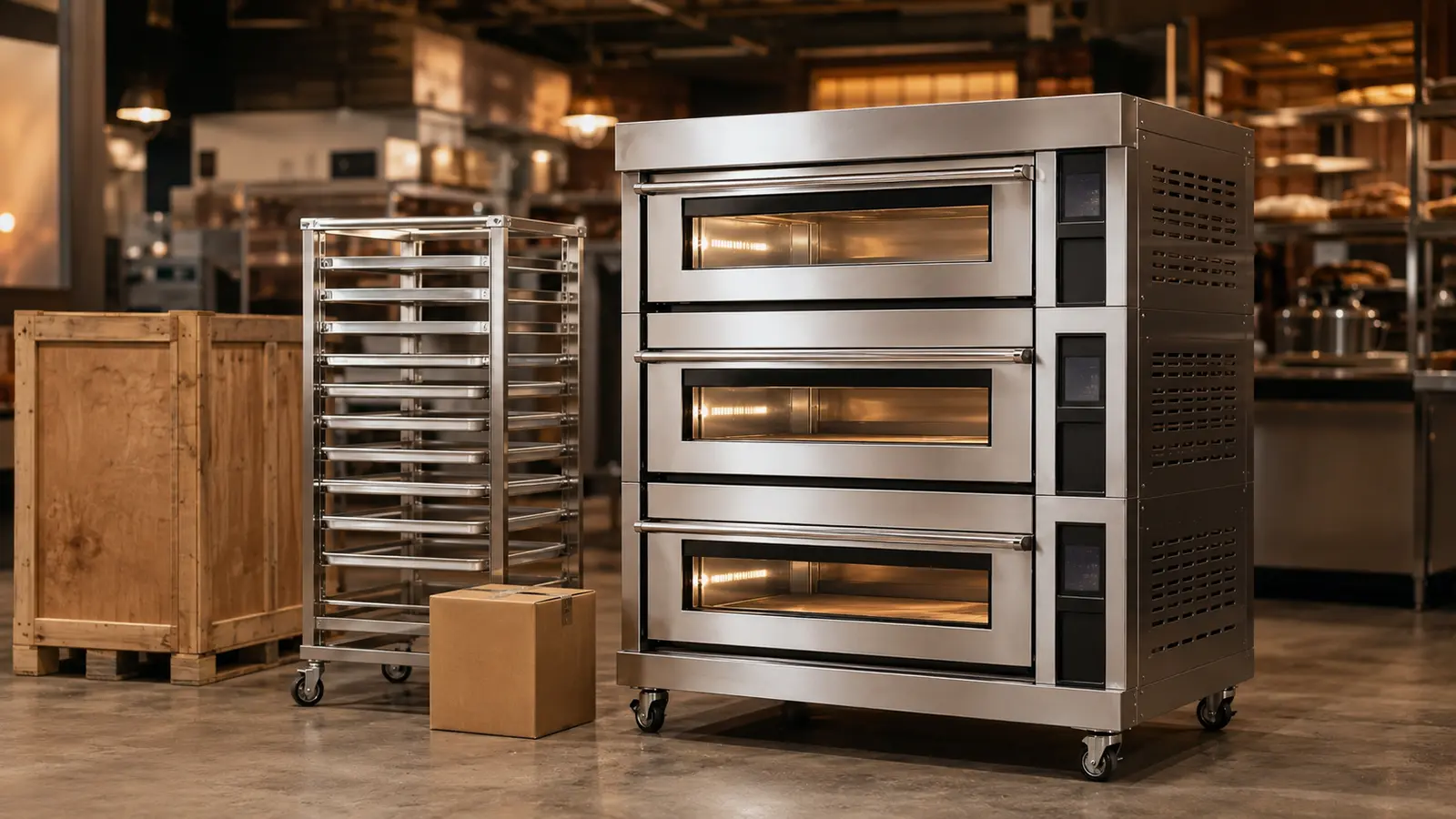
Direct Answer: A bakery oven commercial price changes when suppliers quote different oven architectures, usable capacities, heating systems, electrical configurations, controls, steam functions, materials, accessories, packing and delivery boundaries. Buyers should issue one RFQ schedule and require suppliers to list inclusions, exclusions and deviations. A comparable quotation describes the complete project scope, not only the oven model.
Two quotations can carry the same label—such as “commercial bakery oven”—and still describe substantially different equipment. One may be a deck oven intended for direct tray loading; another may use circulating hot air and a rack. Even two units from the same oven family can differ in chamber layout, tray format, control method, utility connection and included accessories.
That is why a public price list rarely answers a B2B project question. The useful objective is not to find one universal number. It is to understand which inputs are priced, normalize the scope and identify the items that may reappear later as installation, operation or delivery costs. Buyers can begin by reviewing the available commercial baking oven families, then build an RFQ around the required process.
What does an oven quotation actually price?
A quotation may cover only the base machine, or it may include trays, racks, steam hardware, spare parts, export packing, documentation and delivery to a named point. The equipment price can therefore be lower while the buyer’s complete project cost is higher.
Before comparing totals, mark the commercial boundary of each offer:
- Base oven and selected model configuration
- Standard and optional controls
- Trays, racks, stones, pans or loading accessories
- Utility connection components supplied with the machine
- Commissioning, installation or remote support, if offered
- Operating, maintenance and parts documentation
- Spare parts or consumables included
- Export packing, inland handling and agreed trade term
The quoted currency, validity period, payment stages and tax or duty boundary also matter, but they should be reviewed after the technical scopes have been made equivalent.
Which oven architecture changes the cost base?
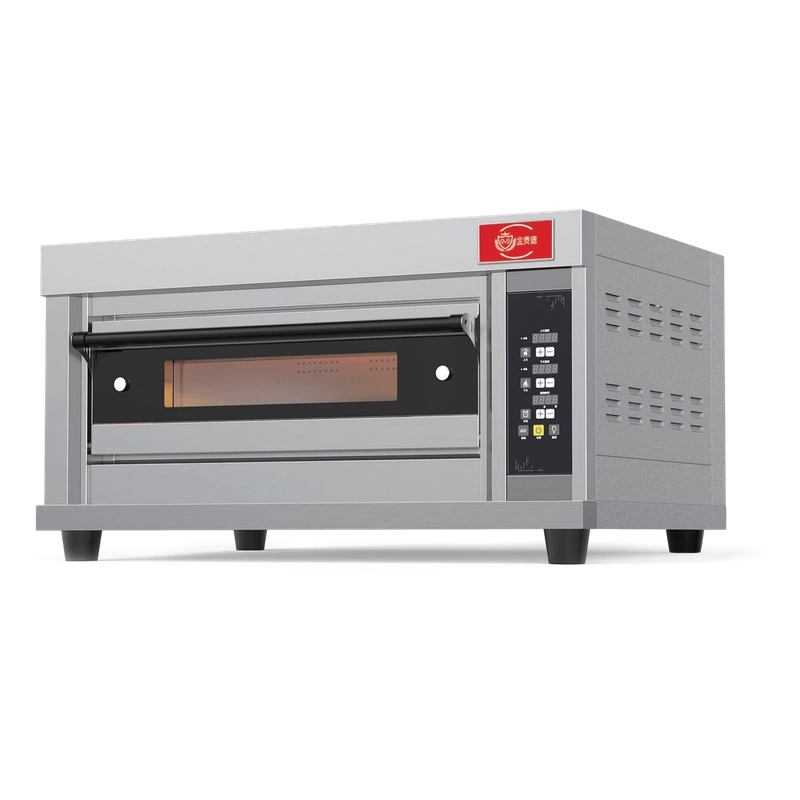
Deck, convection, rack, rotary and combination ovens do not create heat or move product in the same way. Their chamber structures, airflow components, loading systems and controls differ, so their prices should not be compared as if they were interchangeable boxes with equal tray counts.
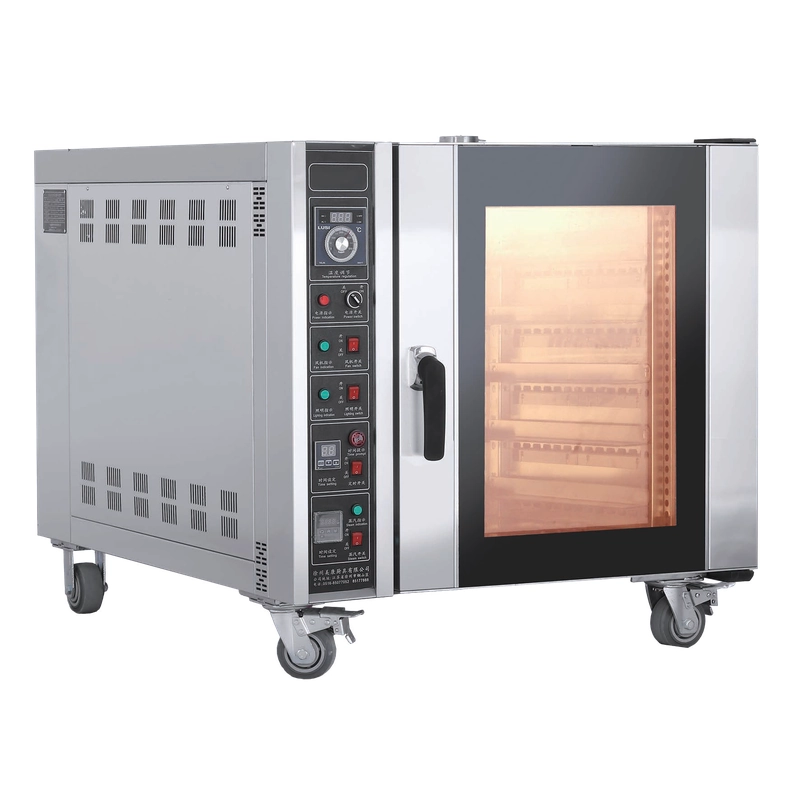
A standard electric deck oven uses independently controlled upper and lower heat in the published configuration. This architecture may suit products that need controlled top and bottom heat. A hot air circulation oven adds a fan-driven airflow system and, on the listed model, adjustable air outlets and an independent steam system. Those functions alter both the equipment configuration and the project questions.
Buyers should first select the baking method that fits the product. Comparing a basic deck oven with a steam-equipped circulating-air oven only by purchase price hides the value and maintenance implications of the different systems.
Why does usable capacity matter more than the model headline?
Capacity affects chamber size, heating load, tray hardware, control architecture and shipping volume. Yet tray count alone is an unreliable comparison. Suppliers may use different tray dimensions, spacing or loading limits. A larger chamber may also require more time or power to recover after the door opens.
Normalize capacity with the actual product:
- Confirm tray dimensions and usable loading area.
- Record pieces or kilograms per tray without restricting airflow or product expansion.
- Use the real bake time, loading time, unloading time and recovery allowance.
- Calculate required batches during normal and peak periods.
- Check whether separate chambers can operate independently when demand is low.
The existing guide on selecting commercial bakery oven capacity explains why theoretical tray quantity and practical hourly output can differ. The RFQ should carry that operational calculation into the quotation stage.
How do energy source and local utilities affect a quote?
Electric and gas ovens require different heating components, controls and site services. Even within an electric quotation, voltage, frequency, phase and connected power can change the build. A gas quotation needs the specified gas type, supply pressure, ignition and control arrangement, ventilation and installation responsibilities.
Jinmaid lists a gas deck oven with instrument-controlled and computer-controlled series. That published distinction demonstrates why “gas deck oven” is not yet a complete price request. The chosen control series and local gas conditions must be stated in the RFQ.
A buyer should not assume the cheapest energy source will produce the lowest lifecycle cost. Consider local tariff structure, warm-up schedule, utilization, maintenance capability and infrastructure upgrades. A low equipment quotation can be offset by electrical work, gas regulation, ventilation or building changes that were outside the supplier’s scope.
Which controls and baking functions add scope?
Control systems range from manual or instrument-based temperature settings to programmable panels with recipe memory, multiple timers and staged functions. The correct level depends on product variety, operator skill and repeatability requirements. Paying for unused programs adds cost; choosing a simple controller for a multi-product chain can increase operator variation.
Other cost-changing functions may include independent top and bottom heat, adjustable fan speed, fan reversal, steam humidification, automatic exhaust, chamber lighting, door-interlock behavior and rack rotation. These features should be described by function rather than by vague labels such as “advanced” or “intelligent.”
For each requested function, buyers should ask three questions: What production problem does it solve? Is it standard or optional on the quoted model? How will its operation be checked before shipment? This prevents a feature list from becoming an unverified price premium.
How do materials and service access influence cost?
“Stainless steel oven” can describe different construction scopes. The food-contact area, chamber, fascia, side panels and internal support parts may not all use the same material. Ask the supplier to define the relevant surfaces and finish in the order specification.
Door glazing, insulation, seals, handles, hinges, lighting and access panels also affect construction and maintenance. A more serviceable design may cost more initially but reduce cleaning time or part-replacement labor. The buyer should inspect how trays, racks, air ducts or inner glass can be removed and whether routine service points are accessible in the planned installation space.
This is a lifecycle-cost decision, not a request for the heaviest possible machine. Additional material only has value when it improves durability, hygiene, thermal control or serviceability in the buyer’s operating conditions.
Which items are often missing from the headline price?
Commercial oven quotations frequently differ because one supplier includes project items that another leaves open. The following schedule helps expose those differences:
| Cost input | Why quotations differ | How to normalize the RFQ |
| Oven type and chamber layout | Deck, convection and rack systems use different structures | State the baking method, chamber quantity and loading format |
| Usable capacity | Tray count may hide different dimensions and product loads | Provide tray drawing, pieces per tray and required batches per hour |
| Energy and utilities | Voltage, phase, gas type, water and ventilation can alter configuration | Issue a site utility sheet with the RFQ |
| Controls | Manual, instrument and programmable systems have different scope | List required functions and recipe or timer needs |
| Steam and airflow | Steam generators, fan systems and exhaust functions may be optional | Specify product requirements and mark each function as required or optional |
| Accessories and spares | Trays, racks, stones and spare parts may be excluded | Use a quantity schedule with part descriptions |
| Testing and documents | Inspection, manuals and requested project documents require different work | Attach an inspection and document checklist |
| Packing and delivery | Crating, handling and trade terms change the commercial boundary | Request packed dimensions, weight and the same named trade term |
Document requirements should be confirmed before order placement. If the destination or project requires specific declarations, labels, manuals or inspection records, the supplier needs time to verify availability for the selected model. Do not assume that a general certificate image applies to every configuration.
How should buyers compare the final quotations?
Create a bid-comparison sheet with one row for every required input. Copy each supplier’s response into three fields: included, excluded or deviation. Keep optional upgrades separate from the compliant base offer. Then add buyer-side costs for omitted trays, utility work, inland transport, installation, commissioning, spare parts and documentation.
Do not repair an incomplete quotation by silently assuming compliance. Send unanswered items back to the supplier. A quotation that is clear about its limitations is safer than a lower offer that leaves critical requirements unstated.
Price changes after technical clarification are not automatically a warning sign. They may reflect a better-defined scope. The useful question is whether the change corresponds to a documented requirement and whether all suppliers are now pricing the same boundary.
Representative Scenario — Not a Claimed Customer Case
Business Background: A bakery chain requests quotations for electric ovens to produce bread rolls and pastries in three new outlets.
Problem: Supplier A offers the lowest unit price for a multi-deck oven. Supplier B’s quotation is higher, but it includes the specified tray set, the required electrical configuration, export packing, a spare-parts package and a defined pre-shipment test.
Cause: The original RFQ stated only deck quantity and product type. It did not freeze tray dimensions, independent chamber controls, voltage and phase, accessories, inspection or delivery scope.
Solution: The buyer issues a revised technical and commercial schedule. Both suppliers must show compliance, exclusions and optional prices against identical rows. Installation contractors separately price the site electrical work.
Buyer Decision Value: The chain can compare total project scope rather than mistaking an incomplete base-machine price for the lowest delivered cost.
What information should an oven RFQ include?
- Products, unit weight, tray loading and baking temperature
- Bake time, batches per hour, operating hours and peak demand
- Required oven architecture and chamber arrangement
- Tray or rack dimensions and quantities
- Electricity, gas, water, drainage and ventilation conditions
- Control, steam, airflow, exhaust and safety functions
- Construction and cleaning requirements
- Accessories, spares, manuals and inspection documents
- Destination, packing expectations, trade term and order quantity
Submit this schedule through the Jinmaid quotation contact page. Ask the supplier to return the RFQ with every line marked as standard, optional, excluded or requiring clarification. That response creates a reliable basis for commercial comparison.
Frequently Asked Questions
Why is there no single bakery oven commercial price?
Commercial ovens vary by architecture, size, capacity, energy source, controls, functions, accessories and delivery scope. A useful price must be tied to a defined model configuration and commercial boundary.
Does a higher tray count always mean a higher oven price?
Not necessarily. Tray dimensions, chamber design, heating system and controls also matter. Compare usable product output and the complete configuration rather than tray count alone.
Do electric and gas oven quotations include installation?
Not automatically. The quotation should state responsibility for electrical connection, gas regulation, ventilation, water, drainage, commissioning and local labor. These items may be outside the equipment supplier’s scope.
Which accessories should be listed separately?
List trays, racks, stones, pans, loading tools, water or gas connection components, spare parts and consumables with quantities. This prevents accessories shown in photographs from being mistaken for included items.
How should buyers compare control-panel options?
Compare the functions the process needs: independent heat control, timers, program storage, fan settings, steam control and operator access. Confirm which functions are standard and how they will be tested.
Can a quotation change after the RFQ is clarified?
Yes. A revised price may reflect a newly defined voltage, capacity, accessory, packing or documentation requirement. The supplier should show the reason for the change so the buyer can keep bids comparable.
Which price basis should appear in the purchase order?
The purchase order should identify the currency, trade term, included equipment and accessories, packing, documents, payment stages and approved quotation revision. Technical specifications should be attached or referenced clearly.