BLOG
How Should Buyers Evaluate Affordable Commercial Kitchen Equipment Suppliers?
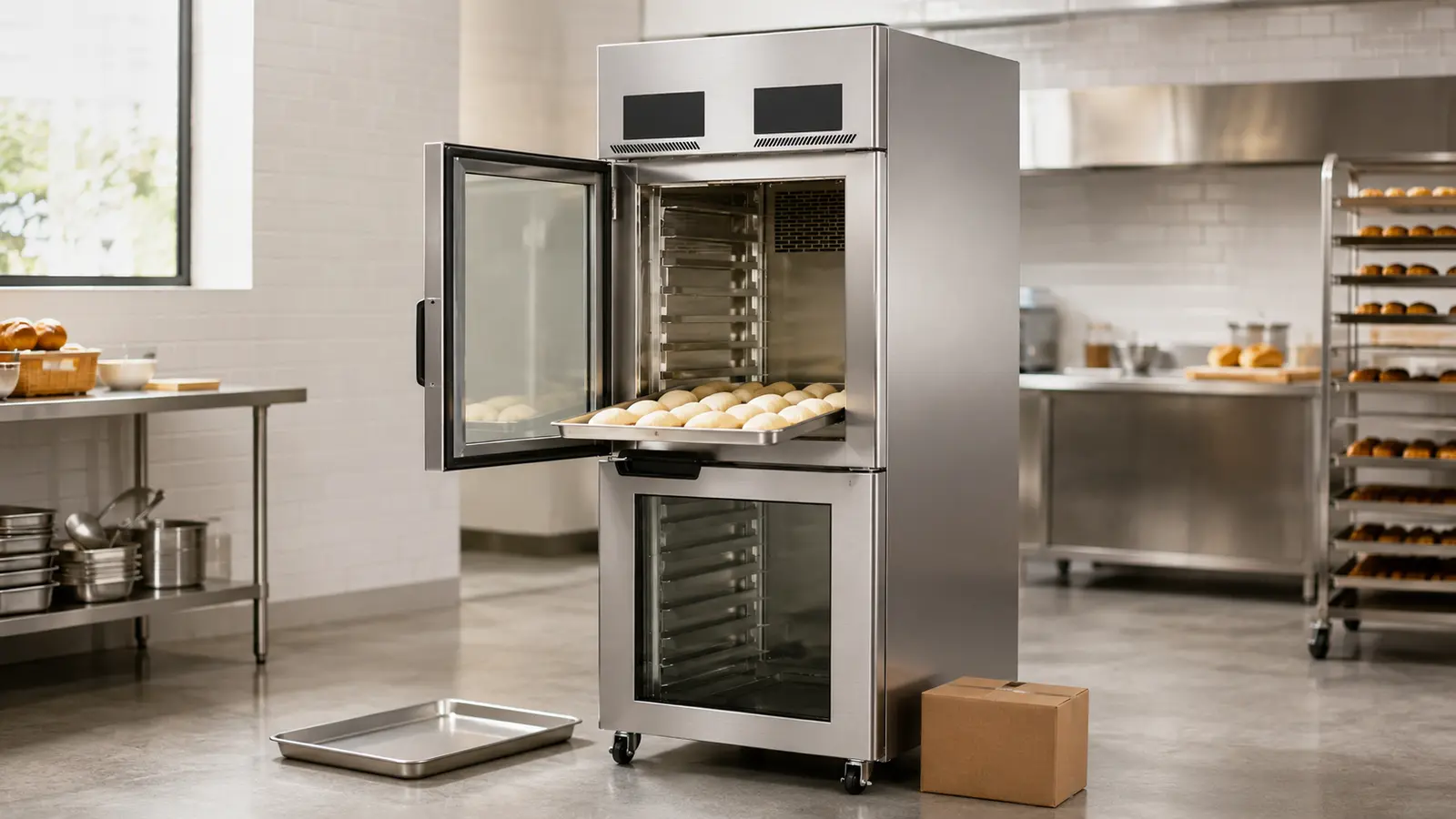
Direct Answer: Evaluate affordable commercial kitchen equipment suppliers by the completeness of their offer, not by the lowest equipment price. Confirm process fit, model specifications, utility requirements, construction, controls, inspection evidence, packing and after-delivery support. For a bakery proofer, the supplier should translate dough load, tray format and production schedule into a verifiable order specification before production.
A low quotation can be commercially sound when it removes features the project does not need. It becomes risky when the saving comes from an undersized chamber, an unsuitable utility configuration, incomplete accessories, weak packing or an undefined inspection standard. Buyers often discover those omissions only after the equipment reaches the bakery, when modification is slower and more expensive.
The following seven checks turn “affordable” into a measurable procurement decision. They are especially relevant when comparing a proofer, but the same discipline applies to the wider range of commercial baking and kitchen equipment.
1. Does the supplier understand the production task?
Begin with the bakery process, not a catalog model. A supplier should ask what dough products will be proofed, the pieces loaded per tray, tray dimensions, batches per shift, peak-hour demand, room conditions and the oven schedule that follows proofing. A cabinet that holds more trays is not automatically more productive if dough loading, recovery time or downstream baking becomes the bottleneck.
Buyers should define the acceptance outcome in operational terms. Useful requirements include the number of prepared trays needed for each oven cycle, the allowable difference in dough development across rack positions, the recovery expected after a door opening and the cleaning time available between production runs. These are more informative than a request for a “large commercial proofer.”
A practical supplier response should show how the proposed equipment fits the sequence from mixing and dividing to proofing, baking and cooling. If the response only repeats model names, the application has not yet been evaluated.
2. Is the proposed proofer type suitable for the workflow?
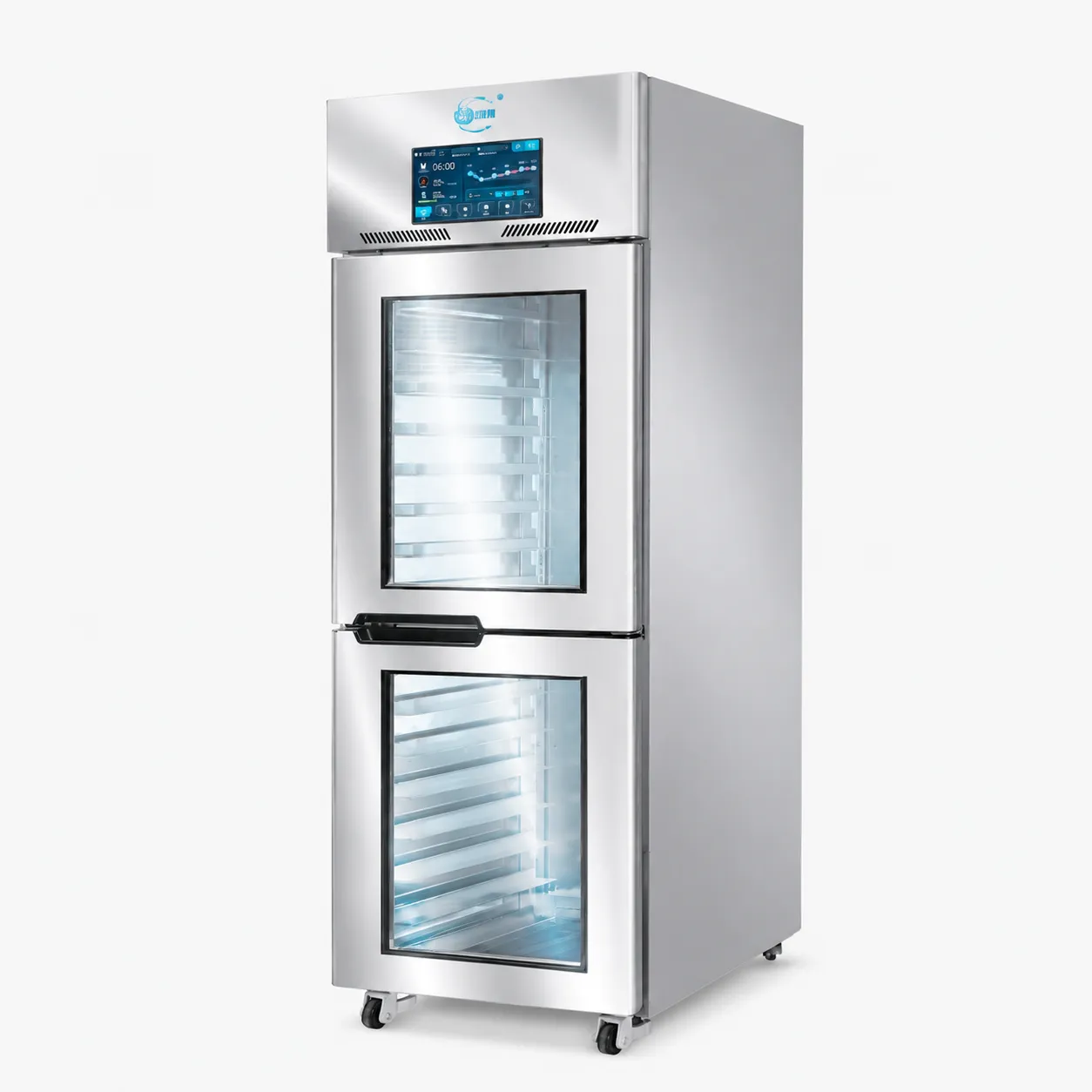
The target product in this project is a boiled or steam-heated proofer. Jinmaid’s Proofer (Boiled) range presents 16-tray and 32-tray configurations. Buyers should still confirm the meaning of every table field in the controlled quotation and determine whether the heating and humidity approach suits local operating practice.
A bakery that mixes and bakes continuously may need straightforward same-shift proofing. A facility that prepares dough in advance and needs scheduled holding may need a different process. The refrigerated proofing-box option belongs in the comparison only when delayed proofing or temperature-controlled holding is part of the production plan. Paying for refrigeration without a process need adds cost and maintenance; omitting it when overnight scheduling is essential creates a workflow failure.
This is the first major trade-off: purchase price versus process fit. The lower-priced type is economical only when it supports the real production schedule.
3. Has the buyer frozen the specifications that control fit?
A model number is not a complete order specification. Before approving the quotation, freeze the equipment dimensions, tray quantity and usable tray size, door orientation, clearance for loading, voltage, frequency, phase, connected power, water or drainage needs, temperature-control range and any required humidity-control method.
Tray compatibility causes avoidable problems. A nominal 16-tray cabinet may not accept the buyer’s existing trays if width, depth, runner spacing or edge geometry differs. Send a dimensioned tray drawing or a verified sample reference rather than relying on a regional tray name. Confirm whether trays, racks or pans are included, because “capacity” and “included accessories” are separate questions.
Installation space also needs more than the cabinet footprint. Check door swing, ventilation, service access, floor condition, water handling and the route from the receiving point to the bakery room. A machine that fits the final position may still be impossible to move through a narrow doorway or elevator.
The existing proofing temperature, humidity and capacity guide can help the operations team prepare this part of the brief before the supplier recommends a model.
4. Can each supplier claim be matched to evidence?
Supplier evaluation improves when every important claim has a corresponding document, image, test or inspection step. “Stainless steel construction,” for example, should identify which surfaces or parts are covered. “Accurate temperature control” should lead to an agreed test method, instrument location and acceptance range. A showroom video demonstrates operation; it does not prove that the production unit matches the approved configuration.
| Supplier statement | Evidence to request | Buyer decision |
| The proofer fits the required trays | Usable internal dimensions, runner spacing and tray drawing | Confirm physical compatibility before order approval |
| The electrical configuration matches the market | Rated voltage, frequency, phase, power and nameplate draft | Check against the installation site and local electrician’s requirements |
| Temperature and humidity are controlled | Control description, sensor location and agreed functional test | Decide whether the control method is sufficient for the dough process |
| The machine is easy to clean | Interior photographs, drain arrangement and removable-part list | Review access against the bakery sanitation routine |
| The unit is ready for shipment | Final configuration photos, packing images and inspection record | Release shipment only after deviations are closed |
Buyers can use the supplier’s company and manufacturing information as an initial background check, but project approval should depend on evidence for the selected model and order—not on general company statements.
5. Will the approved sample and production unit be equivalent?
Catalog photographs, showroom units and production machines may represent different configurations. The order file should identify the approved control panel, door and handle arrangement, caster or foot configuration, tray runners, plug or terminal requirement and visible finish. If the buyer approves a video or sample, record exactly what that approval covers.
Change control is equally important. A substituted controller, fan, heater, seal or electrical component may be reasonable, but the buyer should know whether the change affects function, serviceability or documentation. Require notification before production changes that alter the approved specification. This avoids a common dispute in which both parties refer to “the same model” while working from different revisions.
6. Does the inspection plan test the actual buyer risks?
A power-on check alone is not enough. The pre-shipment inspection should verify identity, quantity, external and internal condition, dimensions, electrical nameplate, controls, door operation, tray fit, water handling where applicable and supplied accessories. Functional checks should follow the agreed equipment design rather than a generic checklist.
Inspection timing matters. Photographs taken before final wiring or packing do not confirm shipment condition. Buyers should define which items are checked during assembly, which are tested on the completed unit and which are photographed after packing. Serial or order references should connect the inspection record to the shipped machine.
For overseas procurement, packaging is part of product protection. Confirm how glass, control panels, protruding handles, casters and loose accessories are secured. Ask whether the package dimensions and weight in the shipping documents refer to the packed unit rather than the bare machine. A cheaper packing method is not economical if movement or moisture exposure creates damage that is difficult to resolve after arrival.
7. Is the commercial offer complete enough to compare?
Compare suppliers on the same commercial boundary. The quotation should state the included equipment, accessories, spare parts, documents, packing, trade term, payment stages, validity and responsibility for installation or commissioning where applicable. Do not assume that trays, plugs, water connections or wear items are included simply because they appear in a photograph.
After-delivery support also has a cost. Ask how the supplier identifies replacement parts, what information is needed for troubleshooting and which documents accompany the equipment. A modestly higher offer may reduce lifecycle cost if the model, components and support route are easier to identify. Conversely, a long list of optional features adds little value when the bakery does not need them.
The practical comparison is therefore not “cheap machine versus expensive machine.” It is approved scope versus approved scope, with foreseeable omissions priced or removed before the purchase order.
Representative Scenario — Not a Claimed Customer Case
Business Background: A regional bakery distributor needs proofers for several small bread shops using the same tray inventory.
Problem: The lowest quotation names a 16-tray proofer but does not state runner spacing, electrical frequency, included trays or packing details. A second quotation is higher and includes a complete dimensional sheet and inspection plan.
Cause: The offers are not based on the same scope. The first supplier has priced a model name; the second has priced a defined configuration and export-delivery package.
Solution: The distributor issues one specification sheet to both suppliers, including the tray drawing, utility data, door and access constraints, required inspection points, packing requirements and spare-parts list. Each exception must be shown in the revised quotation.
Buyer Decision Value: The distributor can now identify a genuinely affordable offer without transferring hidden compatibility and delivery risk to the bakery shops.
What should the first RFQ contain?
- Dough products, pieces per tray and batches per operating shift
- Tray dimensions, edge details and the number of trays required
- Preferred proofing schedule and whether refrigeration is needed
- Site voltage, frequency, phase and available connected load
- Installation dimensions, doorway limits, ventilation and drainage conditions
- Required construction, control and cleaning features
- Inspection evidence, packing standard and document list
- Destination, trade term, order quantity and requested delivery window
Send these details through the Jinmaid equipment enquiry page and ask for a model-specific quotation with all deviations stated. The resulting response will be far more useful than requesting only the lowest unit price.
Frequently Asked Questions
What makes a commercial kitchen equipment supplier affordable?
An affordable supplier provides the required process fit and a complete, verifiable scope at a sustainable total cost. The lowest unit price is not affordable when compatibility changes, missing accessories, damage or weak support create additional expense.
Should buyers select a proofer by tray count?
No. Tray count must be reviewed with usable tray dimensions, runner spacing, dough load, cycle timing, recovery behavior and the downstream oven schedule. Theoretical capacity may differ from practical production capacity.
When is a refrigerated proofer worth considering?
A refrigerated system may suit production that needs delayed proofing or controlled holding before baking. It may be unnecessary for continuous same-shift operation. The decision should follow the bakery schedule and product process.
Which utility details belong in the purchase order?
Record voltage, frequency, phase, connected power and the agreed plug or terminal arrangement. Add water, drainage and ventilation requirements when they apply to the selected equipment.
How can buyers verify stainless steel construction?
Ask the supplier to identify which internal, external and food-contact areas use the stated material. The order specification and inspection record should match those defined areas rather than use a general material claim.
What should a pre-shipment proofer inspection cover?
Check model identity, dimensions, electrical configuration, controls, tray fit, door operation, water handling, accessories, finish, documentation and packing. The detailed list should reflect the project’s principal failure risks.
Why should quotation exceptions be listed?
Exceptions show where a supplier’s offer differs from the buyer’s requested specification. Without them, both parties may believe the quotation is compliant while holding different assumptions about accessories, utilities, materials or support.