BLOG
Gas vs Electric Commercial Convection Ovens: What Should Buyers Compare?
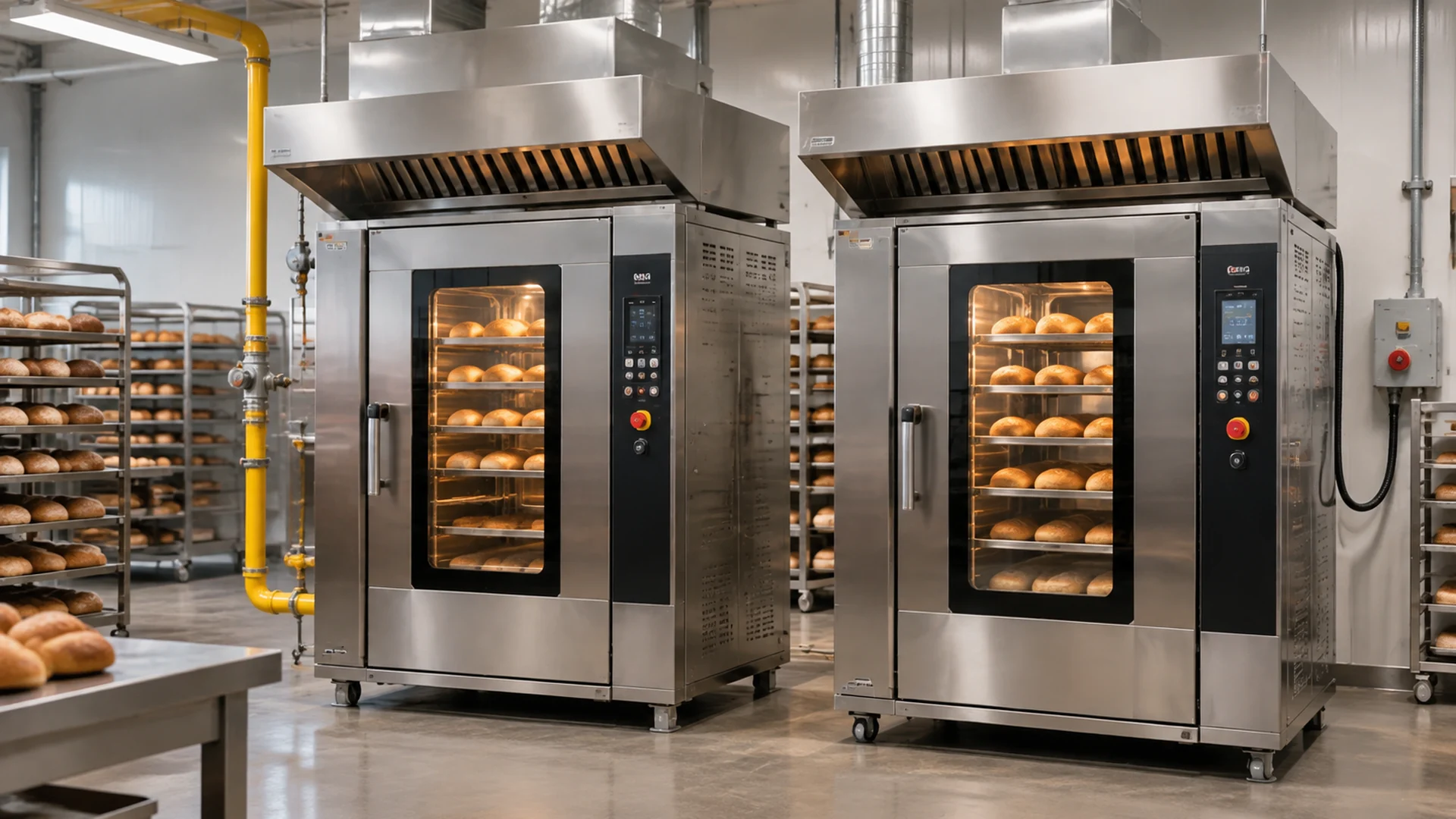
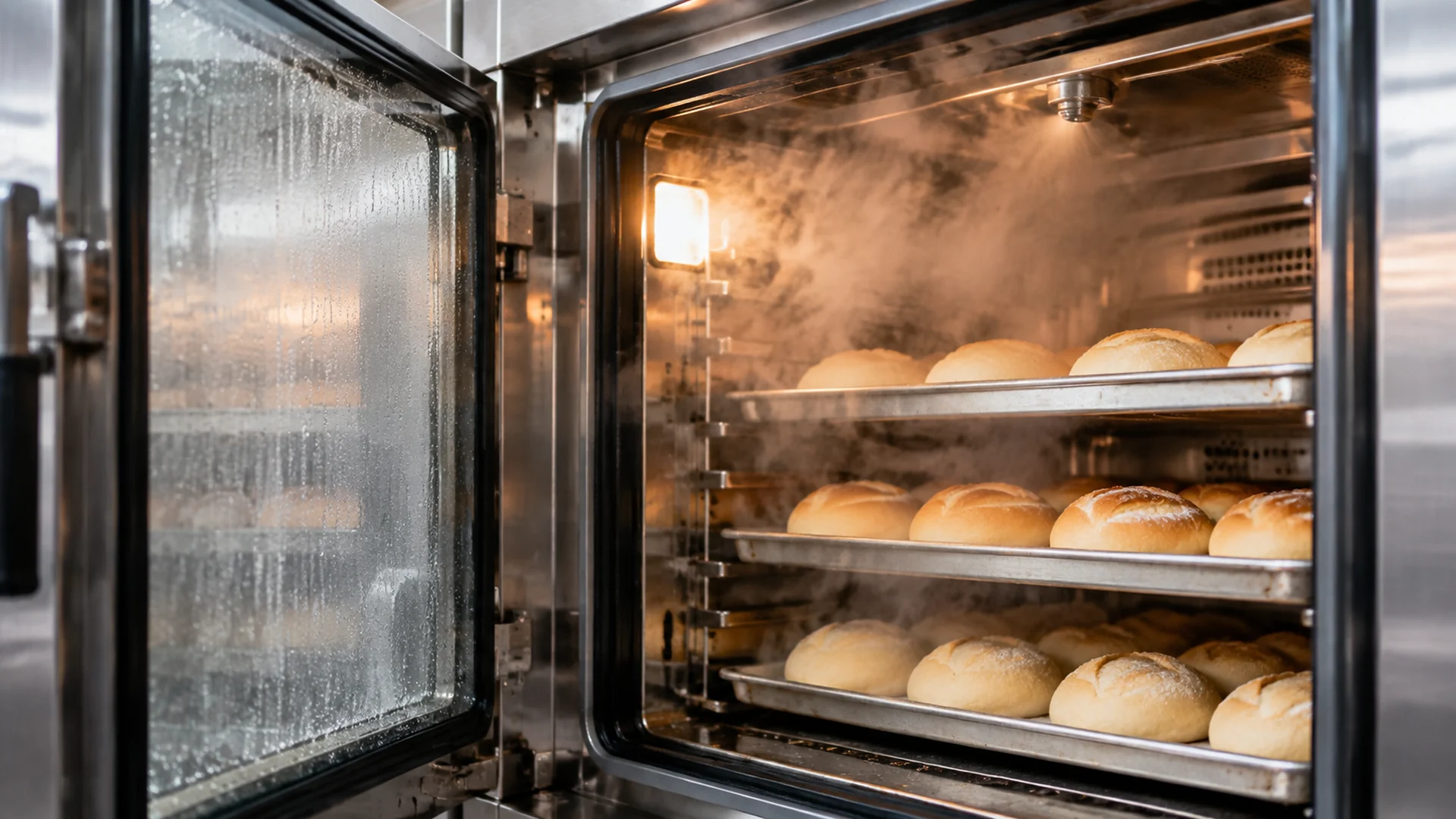
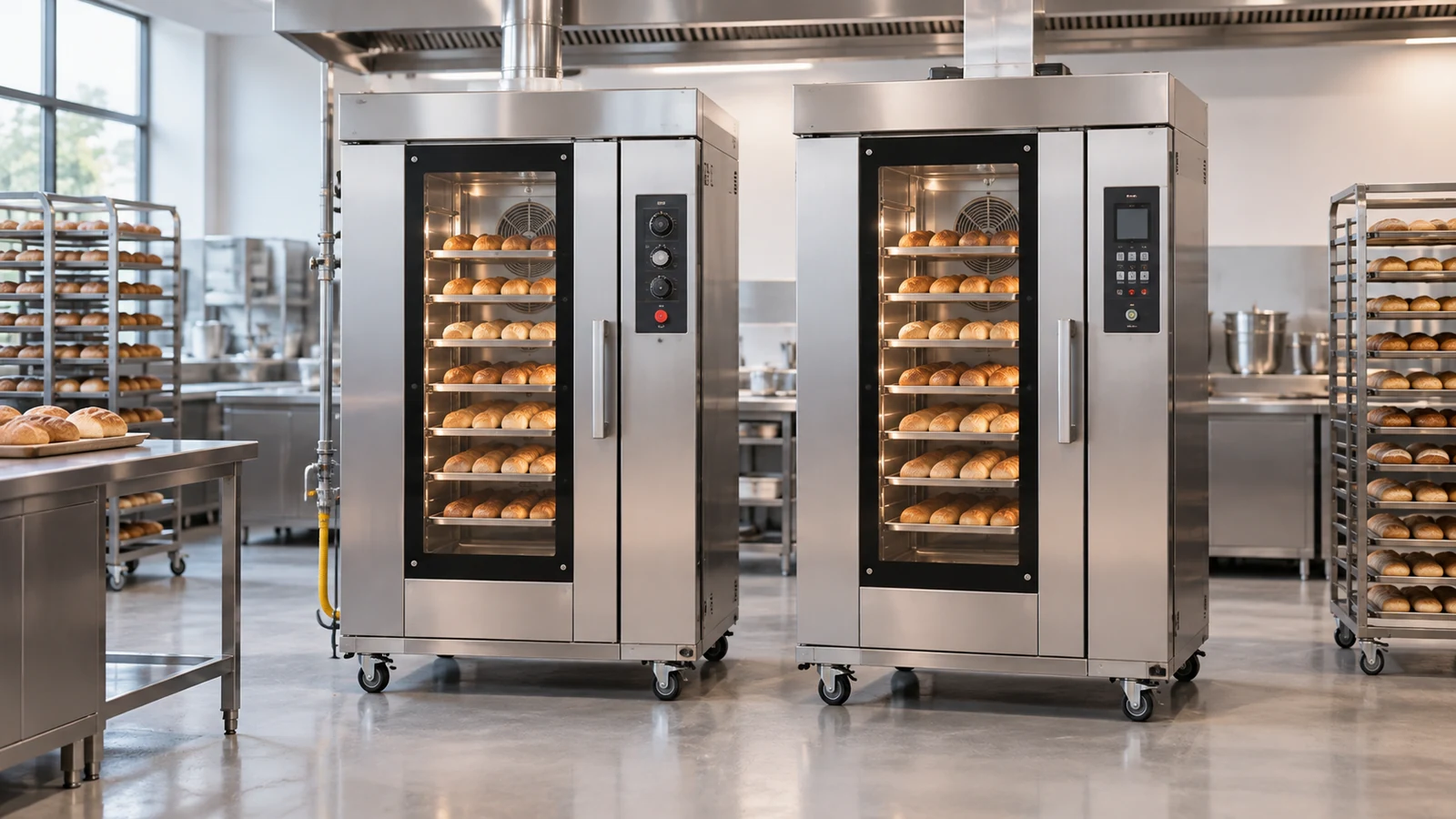
Choosing between a gas and an electric commercial convection oven requires more than comparing the purchase price or the rated power. Buyers should evaluate the available energy supply, oven configuration, installation requirements, actual energy consumption and the production task the equipment must perform. Both heating options can support commercial baking, but their operating costs and suitability depend on the specific model and site conditions.
The most reliable comparison uses equipment with a similar baking capacity and operating duty. A gas oven’s fuel consumption cannot be compared directly with an electric oven’s rated kilowatts, and a difference in tray count or usable baking space can make two apparently similar products unsuitable for a direct cost comparison.
How Do Gas and Electric Convection Ovens Differ?
How a Gas-Fired Convection Oven Supplies Heat
A gas convection oven uses fuel combustion to provide heat, while a fan circulates hot air through the baking chamber. Its performance depends on the burner system, airflow design, temperature control and the way the oven manages heat during loading and recovery.
The installation must provide the correct fuel type and pressure, as well as the ventilation and exhaust arrangements required by the equipment. These requirements should be confirmed from the specific model’s documentation rather than inferred from the general description “gas oven.”
Gas consumption is also a separate specification from thermal output. The amount of fuel used during a production cycle depends on the equipment design, operating temperature, loading pattern, preheating, door opening and time spent at operating conditions.
How an Electric Convection Oven Supplies Heat
An electric convection oven uses electrical heating elements to heat the chamber air or associated heat-transfer components. A circulation fan distributes heat through the chamber, while the controller manages the heating cycle according to the equipment’s design.
Electric ovens require a suitable electrical supply. Voltage, phase, frequency, connected load and the available site capacity should be checked before selecting a model. A published rating such as 11 kW describes a rated electrical input under the manufacturer’s stated conditions; it does not mean the oven consumes 11 kWh in every hour of operation.
Both gas and electric ovens depend on airflow, loading and temperature control. The heating source alone does not establish baking uniformity, recovery time or product quality. Those outcomes should be evaluated against the required product, recipe and operating conditions.
Compare Equivalent Models Before Comparing Energy Sources
Check Tray Capacity and Usable Baking Space
Tray count is a useful starting point, but it does not fully describe production capacity. Tray dimensions, spacing, loading density, product size and the usable baking area affect how much product can be baked in a batch.
Jinmaid lists a six-tray electric hot air circulation oven with published specifications including a 380 V three-phase supply, 11 kW rated power and tray dimensions of 40 × 58 × 1.5 cm. These values describe the listed model and should be checked against its current technical specification before procurement.
The gas hot air circulation furnace is another relevant product category, but the gas and electric products should not be treated as equivalent merely because both use circulating hot air. Confirm the exact model, tray configuration, usable chamber dimensions and rated production conditions before comparing their costs or output.
| Comparison item | What buyers should verify |
|---|---|
| Tray configuration | Number, dimensions, spacing and compatible tray type |
| Usable baking space | Actual chamber dimensions and loading arrangement |
| Heating method | Gas burner or electric heating elements |
| Rated energy input | Electrical input in kW or fuel consumption in the stated gas unit |
| Temperature control | Available setpoints, control method and operating limits |
| Production capacity | Definition of the stated capacity and the conditions under which it applies |
| Installation | Required supply, clearances, ventilation and service access |
A published production figure such as kilograms per hour should not be interpreted as a guaranteed output unless the manufacturer defines the product, loading, cycle time and other conditions behind it.
Separate Rated Input from Actual Energy Consumption
Rated input helps establish the equipment’s supply requirements. Actual energy consumption measures the energy used over a period or production cycle.
An electric oven rated at 11 kW does not necessarily draw 11 kW continuously throughout a baking shift. The heating elements may cycle as the chamber reaches and maintains the set temperature. Similarly, a gas oven’s fuel consumption changes with heat demand, preheating, loading and operating conditions.
For this reason, buyers should distinguish between rated input used for supply planning, energy consumed during preheating, energy consumed during loaded production, energy used during idle periods, and output produced during the same measurement period.
The U.S. Department of Energy’s guidance for commercial ovens provides a useful framework for considering energy performance and purchasing decisions. Its generic category data should not be substituted for measured performance of a particular Jinmaid model.
How Should Buyers Compare Operating Energy Costs?
Calculate the Cost of Each Energy Source
For an electric oven:
Electricity cost = Electricity consumed (kWh) × Electricity price per kWh
For a gas oven:
Gas cost = Gas consumed (m³ or other stated unit) × Gas price per matching unit
The gas consumption unit must match the supplier’s billing unit. If fuel consumption is reported in energy units rather than volume, use the corresponding energy price and avoid mixing the two bases.
To compare production economics, energy cost should be evaluated over the same baking task. A lower hourly cost is not necessarily better if the oven produces fewer acceptable units in that hour.
Energy cost per accepted unit = Energy cost over the measured period ÷ Number of accepted units produced
The accepted unit might be a loaf, tray, batch or kilogram of finished product. Choose a basis that reflects the actual business requirement and use the same definition for both ovens.
Use a Transparent Example Rather Than an Unsupported Savings Claim
Suppose an electric oven consumes 8 kWh during a defined production cycle. If the assumed electricity price is $0.20 per kWh, the energy cost for that cycle is:
8 × $0.20 = $1.60
This is an illustrative calculation, not a measurement of a Jinmaid oven or a statement about electricity prices in a particular market.
A gas-oven comparison would require the gas consumed during an equivalent production cycle and the price per matching unit. Without that input, it would be misleading to declare either option cheaper.
For a useful procurement comparison, collect energy consumed during preheating, energy consumed during a representative loaded cycle, production time and accepted output, energy price and billing unit, idle time, and any auxiliary energy included within the comparison boundary. If measured consumption is unavailable, state the assumptions used. Rated input alone is not proof of actual energy cost.
Which Installation Conditions Can Change the Decision?
Electrical Supply and Connected Load
Before choosing an electric commercial convection oven, confirm the site’s available voltage, phase, frequency and electrical capacity. The supply must support the specified load under the applicable installation requirements.
The published specification for Jinmaid’s six-tray electric oven lists a 380 V three-phase supply and 11 kW rated power. Those values apply to that listed model; they should not be assumed to apply to every electric oven in the product range.
The site assessment should also account for electrical protection, connection method, service access and any requirements stated in the manufacturer’s documentation. A model that fits the production plan may still be unsuitable if the facility cannot provide its required supply.
Gas Supply, Ventilation and Site Requirements
A gas convection oven requires a compatible fuel supply and the operating pressure specified for the model. Confirm the applicable fuel type, consumption, connection requirements, ventilation and exhaust provisions.
Local installation and safety requirements vary by destination market and installation type. Review the equipment specification alongside the site’s actual utility arrangements rather than relying on a general statement that the oven is suitable for export.
Available floor space, access for maintenance, clearance around hot surfaces and the route for moving the equipment into the production area also affect the final decision. Confirm these conditions before ordering, especially when replacing an oven within a fixed layout.
How Can Buyers Make a Defensible Final Choice?
The final choice should reflect the required baking task, the available energy supply and the total cost of operating the equipment under comparable conditions.
- Define the products to be baked, expected batch size and production schedule.
- Shortlist gas and electric models with comparable tray configurations and usable baking space.
- Confirm the exact model’s energy input, control configuration and installation requirements.
- Obtain measured or clearly qualified energy-consumption data for a representative production cycle.
- Compare energy cost per accepted unit, not just purchase price or hourly consumption.
- Verify the final model specification and site’s utility capacity before confirming the order.
Neither gas nor electric heating is automatically the better choice for every bakery. A facility with suitable gas infrastructure may evaluate a gas model differently from a site with ample electrical capacity but no appropriate gas supply. The final decision should follow actual operating conditions and the evidence available for the candidate models.
To discuss a specific configuration, contact Jinmaid with the intended products, required tray capacity, production schedule and available energy supply. Those details make it possible to assess the relevant model specifications without assuming that two different oven configurations have equivalent output.
References
- U.S. Department of Energy, Federal Energy Management Program. Purchasing Energy-Efficient Commercial Ovens. General purchasing guidance for commercial oven energy performance.
- Jinmaid. Hot Air Circulation Electric Oven (6 Trays). Product listing and published model specifications.
- Jinmaid. Gas Hot Air Circulation Furnace. Product category and associated model information.