BLOG
Convection vs Deck Oven: Which Configuration Fits a Commercial Bakery Workflow?
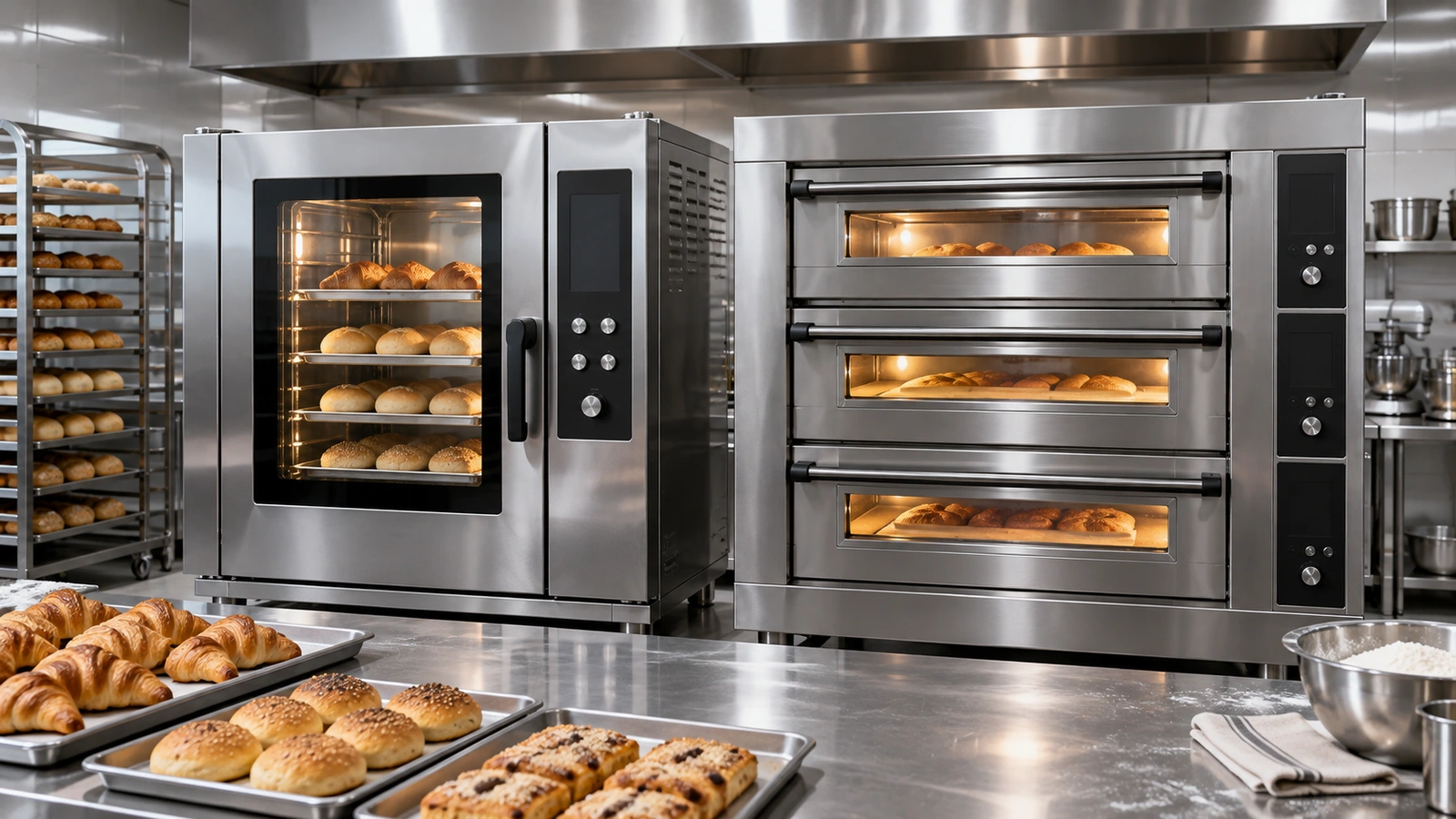
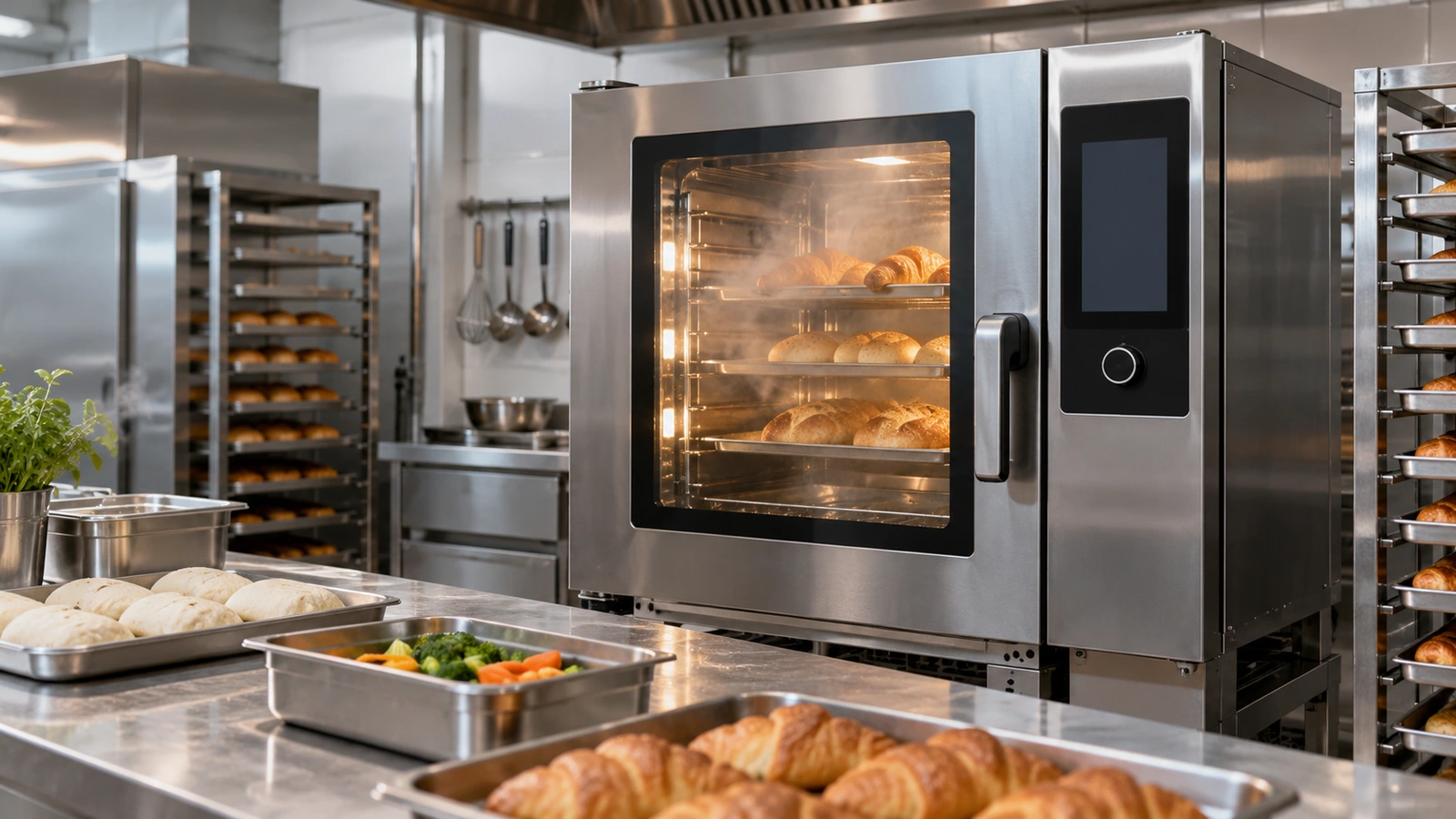
The convection vs deck oven decision should start with the bakery’s product mix and loading workflow. Hot-air circulation ovens move heated air around trays with a fan-driven system, while deck ovens are built around separate baking chambers or decks and give buyers more direct control over top and bottom heat. Neither configuration is universally better. The practical choice depends on how products are loaded, whether the bakery needs airflow or stronger deck-style heat control, how steam is used, which utilities are available, how often products change, and what cleaning and operator workflow the bakery can support.
The Heat-Transfer Method Changes the Production Workflow
Convection-style equipment uses forced air movement as a major heat-transfer mechanism. In commercial bakery practice, circulating hot air helps move heat across multiple trays and can be useful when the product mix depends on tray-loaded batches. Deck ovens use a different architecture: each chamber or deck creates its own baking environment, and the product receives heat from the deck/chamber surfaces and controlled top/bottom heat. That difference changes how a baker loads, monitors and adjusts the oven.
Jinmaide’s primary comparison product, the HOT AIR CIRCULATION FURNACE, documents a timed forward/reverse hot-air circulation system and an adjustable air-duct outlet. These features make airflow an explicit operating variable. The product page also lists an independent steam system and both gas and electric model families.
Jinmaide’s deck-oven pages show a different control logic. The STANDARD STYLE ELECCTRIC DECK OVEN documents independent top-fire and bottom-fire operation, while the GAS DECK OVEN is offered in instrument-controlled and computer-controlled series. This gives buyers a real configuration difference to evaluate: airflow management versus deck/chamber heat management.
The comparison should therefore be framed as a process choice, not a claim that convection is “modern” and deck is “traditional.” The bakery must decide which heat-transfer behavior is easier to control for its actual products and staff.
Product Mix Should Lead the Equipment Decision
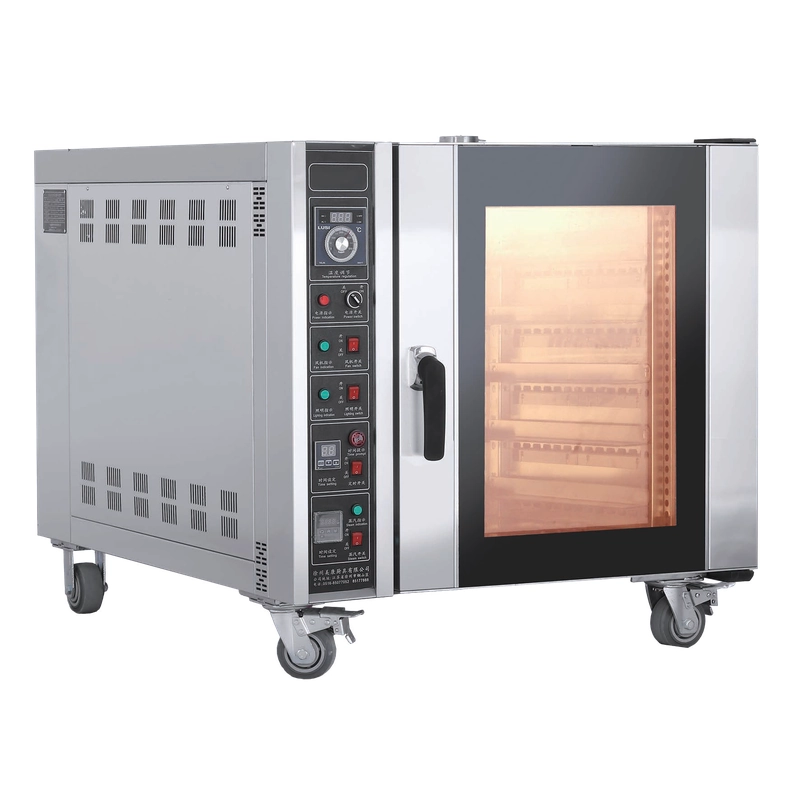
A bakery with croissants, cookies, buns and tray-loaded pastries may value a hot-air circulation workflow because products are commonly loaded on multiple trays and the fan-driven environment is part of the baking method. A bakery centered on artisan bread, pizza or products that depend strongly on controlled bottom and top heat may prefer a deck configuration. Mixed bakeries may need both, or may select one as the primary oven and use another architecture for specialty products.
These are application tendencies, not guarantees of finished quality. Dough formulation, proofing, loading density, tray material, temperature profile and operator practice all affect the bake. The correct procurement question is therefore: which oven architecture gives the bakery the control variables it actually uses?
For example, Jinmaide’s hot-air furnace allows the buyer to consider fan direction timing, air-outlet adjustment and steam timing. The electric deck oven gives the buyer independent top and bottom heat control. If a product needs different color development on its top and base, that deck-style control may be important. If a product is baked across several trays and the bakery relies on air movement around the load, the circulation system becomes more relevant.
Before requesting a quote, list the top five products by production volume and note how each one is currently baked: pan or tray type, number of trays, product height, target color, steam use, cycle time and any known hot-spot problem. That list is more useful than saying the bakery wants “even baking.”
Tray and Deck Format Changes How Capacity Should Be Calculated
Capacity comparisons are often distorted because a tray count is treated as equivalent to a deck count. They measure different things. A circulation oven may be specified by tray positions; a deck oven may be specified by number of decks/layers and trays per deck. Usable output still depends on product size, spacing and cycle time.
The Jinmaide hot-air circulation furnace family lists 5-, 8- and 10-tray configurations across gas and electric versions. The standard electric deck oven lists configurations such as one layer/two trays, two layers/four trays, three layers/six trays and three layers/nine trays. The gas deck oven has corresponding layer/tray variants.
| Workflow Question | Hot-Air Circulation Configuration | Deck-Oven Configuration |
|---|---|---|
| How is the load organized? | Multiple trays positioned in a circulation chamber. | Trays or products are divided among independent decks/layers. |
| What controls heat distribution? | Fan-driven hot-air movement, fan timing and air-outlet adjustment. | Deck/chamber heating with top and bottom heat control on verified electric models. |
| How should capacity be compared? | Tray count × usable loading × cycle time. | Deck count × trays per deck × usable loading × cycle time. |
| What changes the result? | Tray spacing, airflow obstruction, fan setting, load density and steam use. | Top/bottom heat settings, deck loading, chamber recovery and product placement. |
This is why a bakery should not compare “8 trays” with “two decks” as if they were direct equivalents. The buyer needs a production calculation based on the real product and the number of sellable batches per hour. If output matters commercially, a sample bake or production simulation is more useful than a nominal tray count.
Airflow Is a Control Variable, Not Automatically an Advantage
Forced airflow can improve heat movement through a loaded chamber, but airflow also interacts with product surface moisture and delicate structure. A strong air stream may be useful for some bakery items and less suitable for products that can deform, skin over or dry too quickly. That is why Jinmaide’s hot-air circulation furnace documentation includes two relevant design points: timed forward/reverse circulation and adjustable air outlet size.
Those features should be tested rather than advertised as universal benefits. During a trial, load the oven in the pattern the bakery expects to use and compare color, height and surface condition across tray positions. If the buyer needs a gentler stage at the beginning of the bake or a stronger drying stage later, ask how the available controls support that process.
Airflow also interacts with steam. Steam introduced early in a bread bake can keep the surface flexible, while dry moving air later in the cycle can help remove moisture and develop the crust. The optimal sequence depends on the product. For procurement, the important point is that the buyer should define when humidity is needed and when drying is needed, then verify whether the selected oven can execute that sequence consistently.
Deck Heat Gives a Different Type of Control
Commercial deck ovens are commonly selected when the bakery wants strong control over the heat coming from above and below the product. The Jinmaide standard electric deck oven explicitly documents independent top-fire and bottom-fire operation. That control can be valuable when the bakery needs to adjust base color, top color or baking intensity without changing the entire chamber in the same way.
The deck architecture also allows different decks to act as separate production zones when the model provides independent control. For a bakery running a narrower, repeatable menu, that can support a stable product-specific workflow. The trade-off is that the operator must manage deck loading, timing and heat settings carefully; a deck oven does not remove the need for process discipline.
Buyers should also avoid assuming that every deck oven includes a steam system. Steam is important for many bread processes, but the steam capability of a particular deck oven must be confirmed from the exact product page or quotation. Jinmaide’s hot-air circulation furnace has a documented independent steam system; the supporting deck-oven pages used for this comparison should not be described as steam-equipped unless the supplier verifies that configuration.
Utilities Can Change the Decision Before Baking Performance Is Tested
A bakery may prefer one heat-transfer method but discover that the site utilities favor another configuration. Jinmaide’s hot-air circulation furnace family includes gas and electric versions. The supporting deck-oven family also includes gas and electric products, so the decision can be separated into two layers: first choose the baking architecture, then choose the energy configuration that fits the site.
For the hot-air furnace, the published table includes electric models using 380V and gas models using LPG with specified gas pressure and consumption values. The gas deck oven page lists LPG configurations, while the standard electric deck oven lists 220V/380V or 380V 3N~ depending on model. These are model-level values, not universal site requirements.
The RFQ should provide the destination voltage/frequency, available phase, gas type and pressure if gas is being considered, ventilation/exhaust conditions, installation space and local service constraints. The supplier can then return an appropriate model rather than quoting a configuration that requires site changes after purchase.
Utility fit can therefore eliminate an option before product testing. A bakery without suitable gas infrastructure should not compare gas and electric purchase prices as if installation were equal. Likewise, an electric model with a higher connected load may require a circuit or service upgrade that belongs in the project cost.
Control Style and Product Changeover Affect Operator Work
The existing Jinmaide product data shows different control approaches across the comparison. The hot-air furnace family includes instrument-controlled and computer-controlled variants. The gas deck oven is also listed in instrument-controlled and computer-controlled series, while the standard electric deck oven includes corresponding variants in its specification table.
Control style should be matched to operator skill and product changeover frequency. A bakery with stable products and experienced operators may prefer direct manual or instrument-style control. A site with frequent product changes, multiple shifts or a need for repeatable setpoints may value a more programmable control approach. The equipment choice is not simply “computer is better”; it is whether the chosen interface supports the bakery’s production discipline.
During supplier evaluation, request a photo or video of the actual control panel, operating instructions and a sample program or setup sequence for the quoted version. Confirm which controls operate fan behavior, steam timing, top/bottom heat, timers and temperature on that exact model. Similar-looking ovens can have different control scope.
Cleaning and Maintenance Follow Different Daily Patterns
The hot-air circulation furnace documentation states that the tray grill can be removed for cleaning. It also documents a door switch that stops the circulation motor when the door is opened. These details matter because a fan-driven oven has air ducts, racks and circulation components that must remain clean enough for predictable airflow.
Deck ovens have a different daily cleaning pattern because product loading is organized around decks/chambers rather than a single fan-driven tray chamber. The buyer should ask how crumbs, flour, grease or baked residue are removed from the deck or tray area, how heating surfaces are protected, and what access is required for routine service. The supporting Jinmaide deck pages do not justify a universal cleaning-time claim, so this should remain a supplier confirmation point.
Maintenance comparison should follow the same logic. For a circulation oven, ask about fan and air-duct access, steam-system maintenance and safety-switch checks. For a deck oven, ask about heating elements or burners, temperature controls, door seals and deck/chamber maintenance. A quotation is more useful when routine service parts and access points are identified before purchase.
A Buyer Decision Matrix Should Reflect Product Mix, Not Marketing Labels
| Decision Variable | Condition Favors Hot-Air Circulation | Condition Favors Deck Workflow | Evidence to Request |
|---|---|---|---|
| Product mix | Tray-loaded products where controlled air movement is part of the process. | Products where top/bottom heat or deck-specific baking behavior is central. | Trial bake using the buyer’s top-volume products. |
| Loading method | Multi-tray chamber loading and circulation around trays. | Independent deck/layer loading with product-specific heat settings. | Loading diagram and usable tray/deck dimensions. |
| Steam | Primary Jinmaide hot-air furnace has a documented independent steam system. | Confirm steam separately for the exact deck model; do not assume. | Steam-system specification and operating instructions. |
| Heat control | Fan timing and adjustable air outlet are relevant variables. | Independent top/bottom heat is documented on the standard electric deck oven. | Control-panel guide and model-specific operating manual. |
| Utilities | Gas and electric hot-air furnace variants are listed. | Gas and electric deck-oven product families are listed. | Electrical/gas specification matched to the destination site. |
| Changeover | Useful where tray products and airflow settings change across the day. | Useful where separate decks can be assigned stable product heat profiles. | Representative daily production schedule and sample setup procedure. |
The matrix does not select a winner. It exposes the variables that change the decision. If the bakery’s biggest problem is tray-to-tray consistency in a multi-tray workflow, the circulation system deserves close evaluation. If the bakery’s products depend on independent top/bottom heat and separate deck control, the deck architecture may be the better fit. If both product groups are commercially important, the answer may be a mixed equipment plan rather than forcing one oven to do every job.
When Does the Comparison Change?
The comparison changes when the buyer moves away from bakery production into a menu that requires another oven architecture, when the available utilities rule out one configuration, when a site cannot accommodate the required footprint or exhaust arrangement, or when the buyer’s product trial contradicts the expected workflow advantage.
It also changes when a project requires verified performance, certification or compliance evidence that is not present in the current product data. In that situation, the buyer should request model-specific documentation and treat missing evidence as an open procurement item. The article does not support universal claims about bake quality, energy efficiency or regulatory status.
Turn the Comparison Into an Inquiry the Supplier Can Answer
Before asking for a final quotation, prepare one production schedule containing the main products, tray or pan dimensions, normal batch quantity, required steam stage, target top/bottom color control, current utility conditions, planned daily hours, cleaning routine and available installation space. Mark which products are non-negotiable and which can be moved to a secondary oven.
Ask the supplier to return two configurations where useful: one based on the hot-air circulation family and one based on the appropriate deck-oven family. Each response should identify the model, tray/deck configuration, control type, steam scope, utility requirement, included accessories, cleaning/maintenance notes and any deviation from the production brief. After the bakery has compared those responses and, ideally, tested representative products, the project can move through Jinmaide’s contact and inquiry page with a decision based on workflow rather than a generic convection-versus-deck label.