BLOG
What Should Buyers Ask a Commercial Fryer Supplier Before Sending an RFQ?
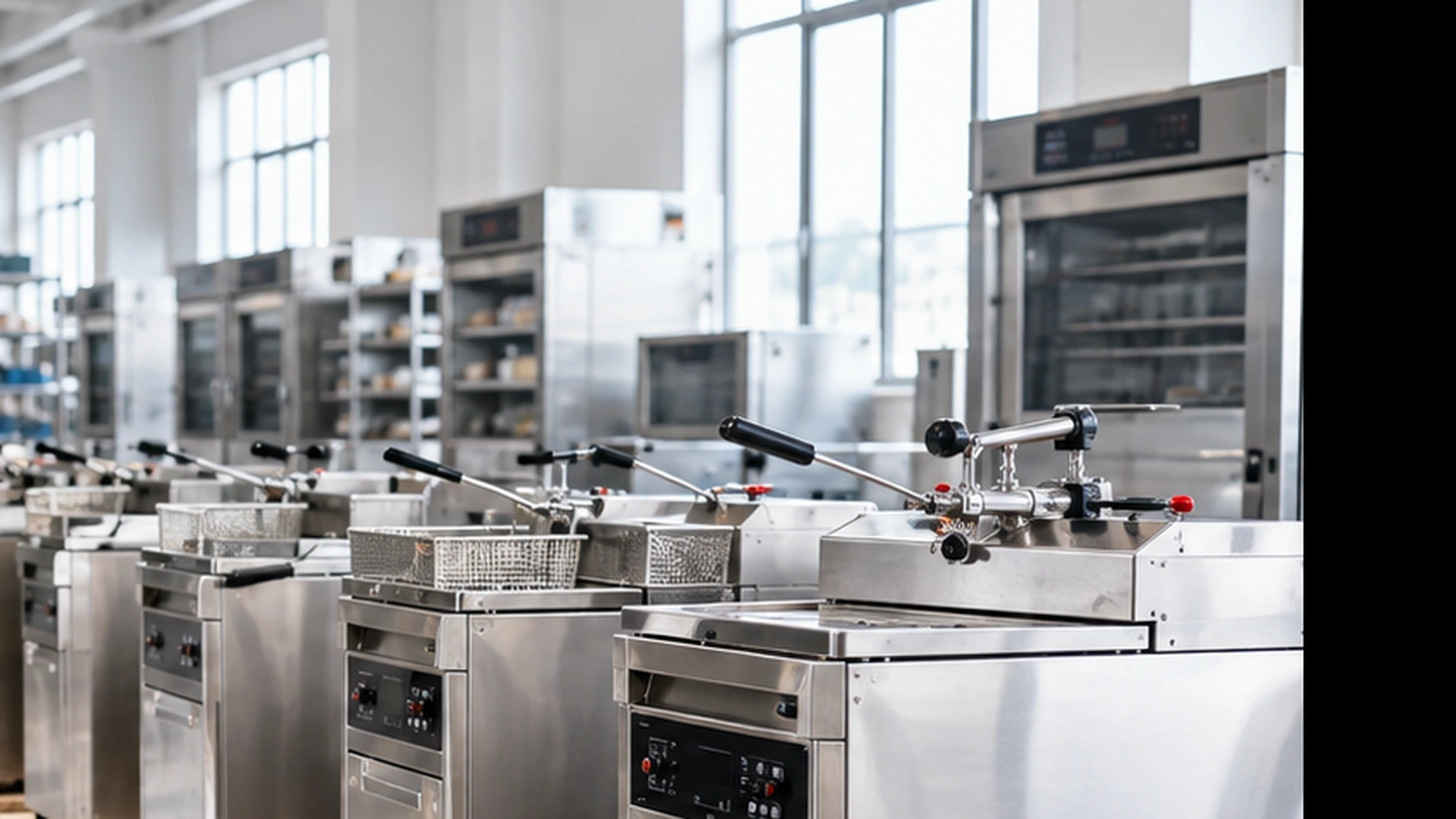
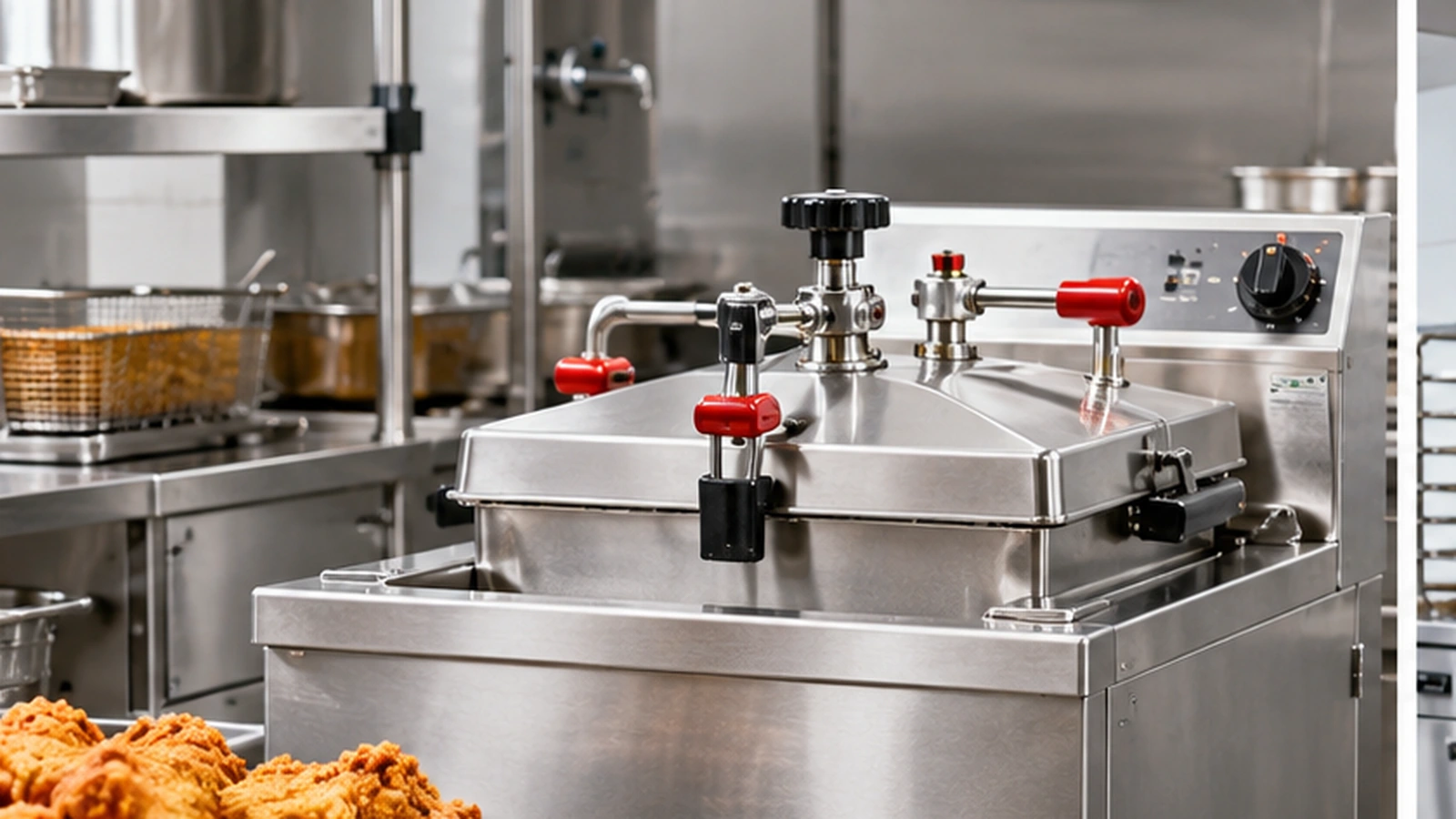
A commercial fryer supplier should be qualified before the buyer asks for final pricing. The RFQ should clarify the food application, fryer type, output target, gas or electric utility conditions, supporting equipment, control requirements, cleaning workflow, documentation, sample plan, packing, quantity and after-sales expectations. A supplier that offers pressure fryers, open fryers and related fried-food preparation equipment may still quote the wrong scope if the buyer does not define the whole cooking line. For projects involving fried chicken, even pre-frying equipment such as a breader should be specified separately from the fryer so the quotation does not hide missing workflow components.
Start by Defining the Frying Workflow the Supplier Must Support
Supplier evaluation should begin with the buyer’s kitchen workflow, not with a request for the cheapest fryer model. A commercial fryer supplier may serve restaurants, fried chicken shops, hotel kitchens, catering chains, bakery-food counters or distributors. Each buyer type needs a different level of product range, documentation and order support.
The first RFQ question should be: what exactly must the supplier support? The answer may include one pressure fryer for a chicken shop, several open fryers for snacks, a gas lift fryer for high-volume operation, or a broader fried-food line with breading, frying and warming equipment. Without that workflow definition, the supplier may quote a single fryer while the buyer expects a complete operating station.
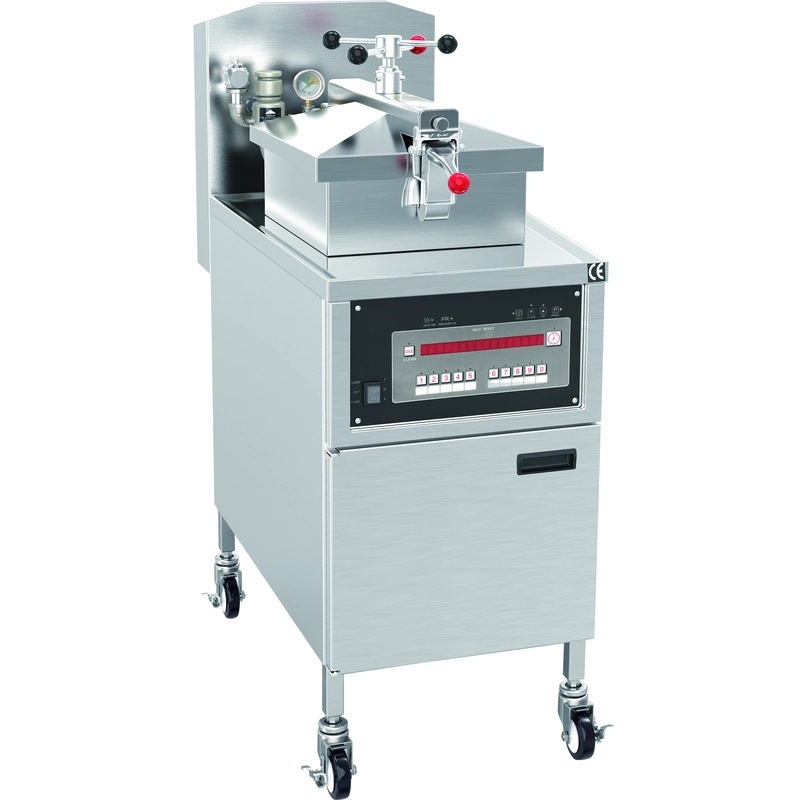
Jinmaide’s Commercial Fryers category includes fryer-related equipment such as gas pressure fryers, gas-powered lift fryers, electric pressure fryers, electric open fryers, breading equipment and warming/display products. This category context is useful for scope discussion, but the buyer should still specify which parts belong in the RFQ.
Ask Which Fryer Type Matches the Menu and Output Requirement
The supplier should not be evaluated only by whether it can say “yes” to commercial fryers. Buyers should ask how the supplier matches fryer type to menu and output. Pressure frying, open frying, lift frying and electric pressure frying solve different kitchen problems.
For fried chicken, pressure frying may be reviewed because the buyer wants a defined batch cycle and moisture-retention result. For fries, chips or flexible snack menus, open frying or lift-frying options may be more practical. For stores without gas installation, electric models may be necessary. For high-traffic service, multiple tanks or automatic lifting may matter more than a single unit’s headline specification.
A useful supplier response should connect menu, batch size, peak demand and utilities to the proposed fryer. If the supplier cannot explain why a particular fryer type fits the buyer’s workflow, the quotation may be a catalogue response rather than a project-specific recommendation.
The buyer should ask suppliers to mark alternatives clearly. If one quote is for gas pressure fryers and another is for gas-powered lift fryers, the comparison should show that the products answer different operating assumptions.
Verify Utilities and Installation Conditions Before Discussing Bulk Price
Commercial fryers depend on site utilities. Gas fryers need the correct gas configuration and ventilation plan. Electric fryers need the correct power supply and circuit planning. Both need floor space, service access, cleaning access and local installation review.
The RFQ should provide the destination market, available gas or power condition, kitchen layout, hood or ventilation information, floor space and any local compliance requirement known to the buyer. The supplier should then confirm what information remains missing before final quotation.
This is especially important for distributors. A distributor may sell the same fryer family into several markets with different gas, voltage or documentation requirements. A single generic quotation may not support all of those end customers.
Installation support should also be separated from product supply. The supplier may provide manuals, layout data or technical guidance, while local installation may remain the buyer’s or distributor’s responsibility. The quotation should state that boundary.
Product Scope Should Include Workflow Equipment, Not Only the Fryer Body
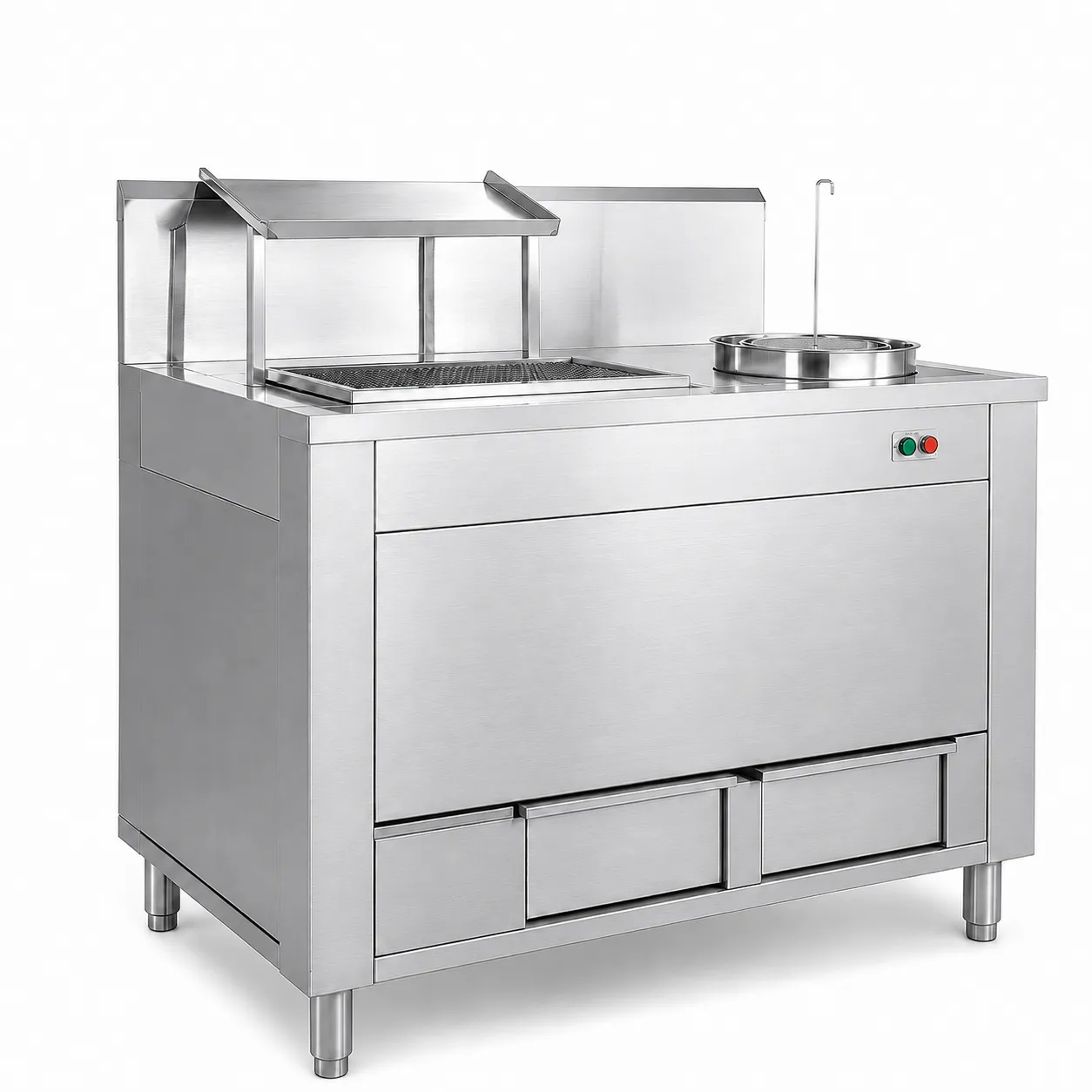
Fried-food operations often include equipment before and after the fryer. A chicken shop may need breading equipment before frying and warming or display equipment after cooking. A supplier evaluation should therefore check whether related workflow products are available and whether they are included in the quotation.
The target product page for this article is Electric Chicken Breader. This product should not be described as a fryer. It is better understood as a pre-frying support device for chicken-breading workflow. Its relevance to a commercial fryer supplier RFQ is scope control: if the buyer expects a complete fried chicken preparation line, breading equipment must be quoted as its own item instead of being assumed inside the fryer price.
This distinction helps avoid two quotation mistakes. First, the buyer may compare a complete line quote against a fryer-only quote and think one supplier is more expensive. Second, the buyer may order a fryer and later discover that the preparation stage still needs separate equipment. By identifying the breader, fryer and warmer as separate line items, the supplier makes the commercial scope clear.
Breading Equipment Can Affect Fryer Line Balance
For fried chicken projects, the breading step can influence how the fryer is loaded, how consistent each batch becomes and how staff move through the preparation line. The breader is not the fryer, but it can still affect the fryer purchase because uneven coating, slow preparation or poorly arranged workstations can make the selected fryer appear inefficient even when the fryer itself is correctly sized.
Buyers should therefore confirm how the breading station fits the fryer workflow. Key questions include whether the kitchen uses manual or assisted breading, how many pieces are prepared per batch, whether the breaded product waits before frying, how flour or coating material is handled, how the equipment is cleaned, and whether the breading output matches the fryer batch size.
This is a production-readiness issue rather than a decorative accessory discussion. A fryer with adequate capacity may still be underused if the preparation stage cannot keep up. Conversely, a fast breading station may overload a fryer that was selected for smaller batches. The RFQ should connect breading output → fryer batch size → staff workflow → holding or warming requirement so the supplier can quote a line that works as a process, not just as separate machines.
Where the buyer does not need breading equipment, the supplier should exclude it clearly and keep the quotation focused on fryer models. Where it is required, the Electric Chicken Breader should be quoted with its own product scope, documentation and packing details.
Ask for Model-Specific Evidence, Not Only Supplier Claims
A commercial fryer supplier should provide evidence that links directly to the quoted products. General statements such as “we have many models” or “we support restaurants” are not enough for B2B purchasing.
For each quoted product, ask for the model name, product page or datasheet, key configuration, utility requirement, dimensions if needed for layout, control functions, packing list, manual, inspection or test document if offered, and any certificate required by the buyer’s market. If the project includes Electric Chicken Breader or other supporting equipment, those items need their own model evidence rather than being bundled under “kitchen equipment.”
| Supplier Evidence | What the Buyer Should Check | Why It Matters |
|---|---|---|
| Product range | Pressure, open, lift, electric and supporting workflow equipment | Confirms whether the supplier can quote the required line scope |
| Model datasheet | Utility, size, control functions and application boundary | Prevents catalogue claims from replacing product-fit evidence |
| Workflow scope | Fryer, breader, warmer, accessories and exclusions listed separately | Makes quotations commercially comparable |
| Documents | Manuals, packing list, inspection records and required certificates by model | Supports distributor and installation approval |
| Sample plan | Trial unit, menu test or distributor review method | Checks usability before larger orders |
| Deviation list | Any difference from the buyer’s requested configuration | Prevents hidden substitutions before ordering |
Evidence should prove the actual offer. If a supplier provides a fryer brochure while the quotation includes a breader and warmer, the supporting items still need their own documentation and packing scope.
Clarify Control, Cleaning and Staff Workflow Requirements
Fryer-line equipment should be selected around daily operation. A supplier may quote equipment that is technically capable, but the buyer still needs to know whether staff can operate, clean and maintain it under the intended workload.
For fryers, buyers should ask about control panel logic, temperature setting, timing, preset programs, alarms or reminders, oil handling, cleaning access and routine maintenance. For a breader, the questions shift toward product flow, powder or breading handling, cleaning access, food-contact surfaces and how the equipment fits before the fryer in the line.
The RFQ should avoid one generic operational question. Ask separately for each equipment type:
- What does the operator do during one normal cycle?
- Which settings must be adjusted daily?
- Which parts require cleaning after service?
- Which accessories or consumables are included?
- Which spare parts are recommended for distributor stock?
- What manual or training material is supplied?
This level of questioning helps suppliers quote a practical kitchen package rather than a single machine detached from daily use.
Compare Supplier Quotations by Scope Before Comparing Price
Two commercial fryer suppliers may submit very different quotations. One may quote one gas pressure fryer. Another may quote a fryer plus baskets, documents and export packing. A third may quote a fryer line with breader and warmer. These offers should not be ranked by total price until the scope is normalized.
The buyer should align:
- which fryer type is included;
- whether supporting equipment is included;
- model and utility configuration;
- quantity by model;
- accessories and spare parts;
- document package;
- packing and labeling;
- installation-support boundary;
- supplier deviations and alternatives.
After these items are aligned, price comparison becomes meaningful. Before alignment, a lower quote may simply represent fewer included items or weaker evidence.
Sample or Trial Review Should Match the Real Menu
For a new menu or distributor introduction, a sample or trial review can reduce purchasing risk. The test should not look only at machine appearance. It should use the intended food, batch size, breading process, cooking cycle and staff workflow.
For a fried chicken project, the trial may include breading consistency before frying, batch loading into the fryer, cooking repeatability, recovery between batches, holding or warming after frying, cleaning workflow and staff safety observations. If Electric Chicken Breader is part of the order, it should be tested as part of the process before the fryer, not as an unrelated machine.
The buyer should record which model, configuration and sample conditions were approved. Future bulk orders should reference that approved configuration so the supplier cannot change included accessories or supporting equipment without review.
When Is the Supplier Not the Right Fit?
A supplier may not be the right fit if it can quote a fryer but cannot support the buyer’s menu, utility configuration, documentation requirement, distributor packaging, spare-parts plan or workflow equipment. The same is true if the supplier cannot clearly separate included and excluded items.
The answer also changes when the buyer’s project is not actually a fryer project. If the primary need is breading, food warming, baking or proofing, the RFQ should use the correct equipment category instead of forcing everything under “commercial fryer supplier.” If the buyer needs a complete fried chicken line, the RFQ should list each stage and ask suppliers to confirm which equipment they provide.
This boundary keeps the supplier evaluation focused. A broad commercial kitchen equipment supplier may be useful, but the buyer should still verify whether the supplier fits this specific fryer-line project.
Build the Final Commercial Fryer Supplier RFQ
A complete RFQ should include:
- buyer type: restaurant, chain, distributor, hotel, catering project or dealer;
- fried product and menu scope;
- required fryer type: pressure, open, lift, gas or electric;
- batch size, peak demand and expected output;
- gas, electric and ventilation conditions;
- supporting workflow equipment such as breader or warmer if required;
- model, quantity and configuration for each item;
- required control functions and staff operation needs;
- cleaning and maintenance expectations;
- sample or menu-trial requirement;
- documentation, manual and certificate requirements;
- accessories, spare parts and consumables to include;
- packing, labeling and export-shipment requirements;
- installation-support boundary;
- supplier deviations, alternatives and missing buyer inputs.
Ask the supplier to return the offer as Product Scope / Confirmed Models / Included Accessories / Documentation Scope / Installation Assumptions / Optional Items / Deviation / Buyer Input Required. Once the fryer line and supporting equipment are defined, the buyer can submit the project through Jinmaide’s contact and inquiry page with an RFQ that qualifies the supplier before comparing price.