BLOG
Pressure Fryers Explained: How They Work and When to Use Them
What Is a Pressure Fryer?
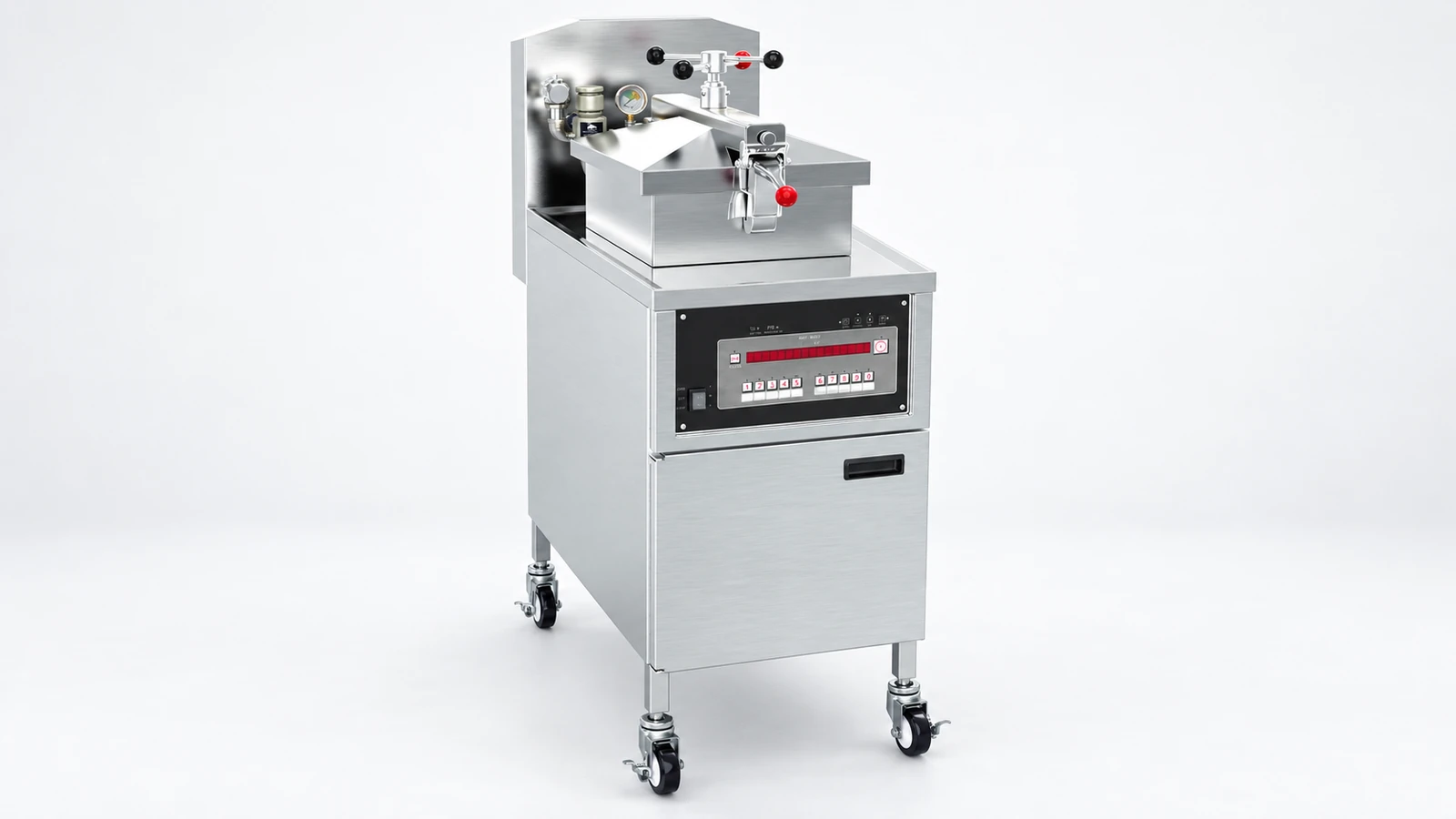
A commercial pressure fryer combines a heated oil vessel with a sealing lid and components that control and indicate pressure. During the pressure-frying stage, the food cooks in oil within the closed vessel. The equipment must be designed for this process; adding a lid to an ordinary fryer does not make it a pressure fryer.
Pressure frying is still a form of deep frying. The term pressure deep fryer describes frying under pressure, whereas an open fryer cooks without a pressurized enclosure. A basket lift, automatic timer or covered tank does not, by itself, establish pressure-frying capability.
A household pressure cooker is a different appliance. An appliance’s ability to pressure-cook with water or broth does not make it suitable for pressure frying with oil. Use equipment specifically designed for pressure frying and follow its model-specific instructions.
How a Pressure Fryer Works
How Food Moisture Creates Pressure
In a conventional commercial pressure fryer, heating the food releases moisture as steam. With the lid sealed, that steam contributes to pressure inside the cooking vessel. A pressure-regulating system controls pressure during cooking; the gauge indicates pressure rather than creating or controlling it.
This explains why the lid seal, pressure regulator and temperature controls have separate jobs. The seal helps the vessel retain pressure, the regulator manages pressure, and the heating system controls the supply of heat to the oil.
Why Oil Temperature and Pressure Are Different
Pressure raises the temperature at which water in the food boils. That changes the conditions under which moisture leaves the food during frying. It does not mean the cooking oil must be hotter than in an open fryer, nor does it mean the oil should boil.
Three specifications therefore need to be kept separate:
- Oil temperature describes the temperature of the frying medium and is part of the cooking program.
- Cooking-vessel pressure describes the pressure maintained inside the sealed fryer during the relevant part of the cycle.
- Gas supply pressure, where applicable, is an installation requirement for the burner system. It is not the pressure used to cook the food.
A temperature range in a product specification is an equipment setting range, not a ready-made recipe. The cooking cycle must suit both the food and the particular model. Settings should not be copied from a different pressure fryer.
Why the Food Load Matters
Because food moisture helps generate steam, the food load affects pressure development. A small batch can behave differently from a larger one, and a fresh product can behave differently from a product that has already been cooked.
For a restaurant pressure fryer, this makes the normal batch and the smallest likely batch relevant to menu planning. Do not assume that every load below the maximum will follow the same cooking cycle. The model’s operating instructions and a cooking program verified for the intended food and load should define the usable range.
When Pressure Frying Fits the Menu
Chicken and Other Foods Considered for Pressure Frying
A pressure fryer for chicken should be evaluated against the chicken the kitchen actually prepares. Bone-in portions, boneless fillets and differently sized pieces are separate cooking requirements. Coating, starting temperature and whether the product is raw or precooked also affect the process that needs to be verified.
Pressure frying is commonly considered when the desired result combines a fried surface with moisture retained inside the food. The finished result still depends on preparation and the cooking program. A pressure fryer does not, on its own, guarantee a particular crust, cooking time or moisture level.
Other foods can also be considered where the equipment instructions and a suitable cooking process support them. A broad menu list is not proof that every listed food works in every model. For frozen products, distinguish raw frozen food from items that have already been cooked or fried; they should not be treated as the same starting material.
When Open Frying May Fit the Workflow Better
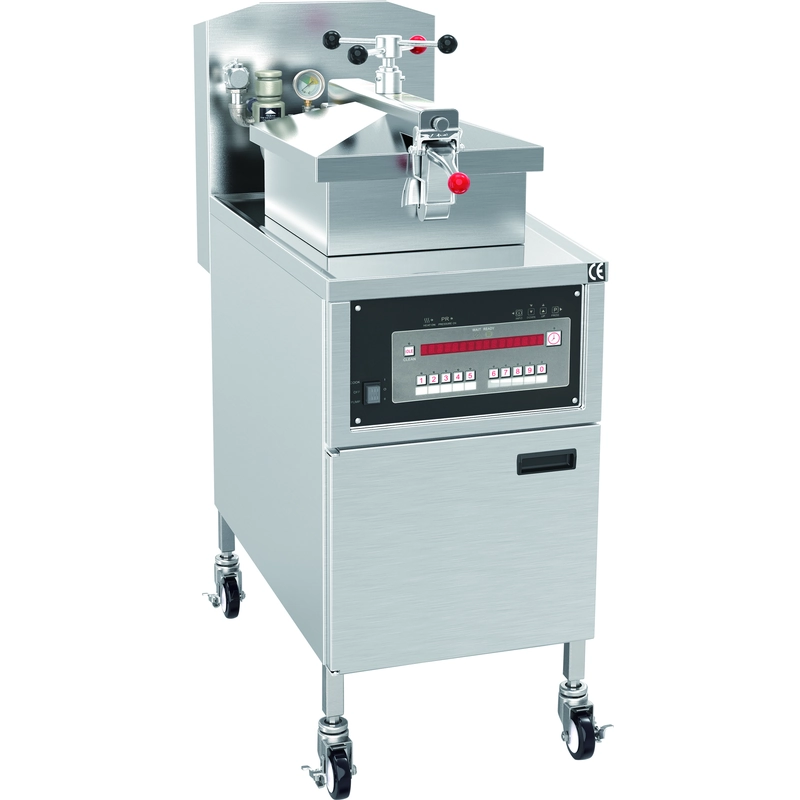
Access during cooking is a practical difference between a pressure fryer and an open fryer. A pressure-frying cycle requires the vessel to remain closed during its pressurized stage. Open frying can be more convenient when the workflow requires observation, separate small orders or basket handling during cooking. The choice depends on how orders are grouped and whether the intended food has a suitable, repeatable cooking process.
| Menu or workflow condition | What to evaluate | Why it matters |
|---|---|---|
| Repeated batches of the same chicken preparation | A pressure-frying process matched to the cut, coating, starting temperature and batch. | Consistent preparation provides a defined basis for checking the cooking result. |
| Frequent small orders that need observation or separate handling | An open-frying workflow, alongside the pressure fryer’s permitted load and cycle requirements. | A sealed pressure cycle limits access to the food until the cycle and pressure-release requirements are complete. |
| A new food, coating or precooked product | A cooking trial for that exact preparation before treating it as an established application. | A result obtained with another food or preparation cannot establish suitability. |
Compare the finished food as well as the process. Check the intended surface texture and internal cooking result using the kitchen’s established food-safety procedures. Claims about faster service or reduced oil use need a defined comparison with the same food, load and operating conditions.
Understanding Electric, Gas and Tabletop Pressure Fryers
Electric and Gas Refer to the Heat Source
An electric pressure fryer uses electrical heating; a gas pressure fryer uses a gas-fired heating system. Both can carry out pressure frying. The energy source does not, by itself, determine which will produce the preferred food result.
For example, Jinmaid lists the PFE-800 among its electric pressure fryers, with 13.5 kW rated power and 25 L oil capacity. Those figures identify the published electrical rating and oil capacity; they do not establish energy use per batch or food output per hour.
Jinmaid’s gas pressure fryers include the PFG-800, listed with 25 L oil capacity and LPG/natural gas as fuel options. The ordered gas configuration must match the available supply. A listing of both fuels should not be read as permission to switch between them without the appropriate equipment configuration.
When comparing electric and gas models, use equivalent specifications. A gas fryer’s electrical requirement is not the same measurement as its burner heat input. Neither a power rating nor the fuel name establishes operating cost without consumption data for a defined cooking duty.
Tabletop Refers to the Equipment Format
A tabletop pressure fryer can also be electric. Jinmaid’s tabletop electric pressure fryer range includes the PFE-22, with a published 12.5 L oil capacity, 3.5 kW power rating and 220 V, 50/60 Hz supply specification.
The PFE-22 illustrates why format and energy source should be considered separately. A tabletop format does not establish domestic suitability or compatibility with any convenient socket or work surface. The support, clearances and electrical connection still need to meet the instructions for the supplied model.
| Model | Product type | Published oil capacity |
|---|---|---|
| PFE-800 | Electric pressure fryer | 25 L |
| PFG-800 | Gas pressure fryer | 25 L |
| PFE-22 | Tabletop electric pressure fryer | 12.5 L |
Oil Capacity, Food Load and Model Limits
Oil capacity is not food capacity. Liters of oil describe the frying medium. Food load describes the permitted quantity and arrangement of food in a batch. Hourly output also depends on the complete cycle and the time needed between batches.
The 25 L oil capacities listed for the PFE-800 and PFG-800 therefore do not establish equal food loads or equal hourly output. Likewise, a 12.5 L oil capacity does not establish half the output of a 25 L fryer. There is no reliable liters-to-portions conversion without a defined food, load and cooking cycle.
Operating limits belong to the particular machine. Confirm the permitted food load, oil level and cooking program in its documentation, and use the specified lid and pressure-release procedure. General descriptions of pressure frying cannot replace those instructions.
From the Cooking Process to a Suitable Model
A suitable pressure fryer starts with a defined food and a pressure-frying process that fits the kitchen’s service pattern. Once those are clear, compare the energy source, equipment format and documented operating limits.
To discuss your pressure frying requirements, provide the food type and preparation, intended batch quantity, available electricity or gas, and installation space and destination market. Jinmaid can use these details to help identify a suitable model and confirm the specifications for the proposed configuration.