BLOG
How a Hot Air Circulation Oven Improves Baking Uniformity
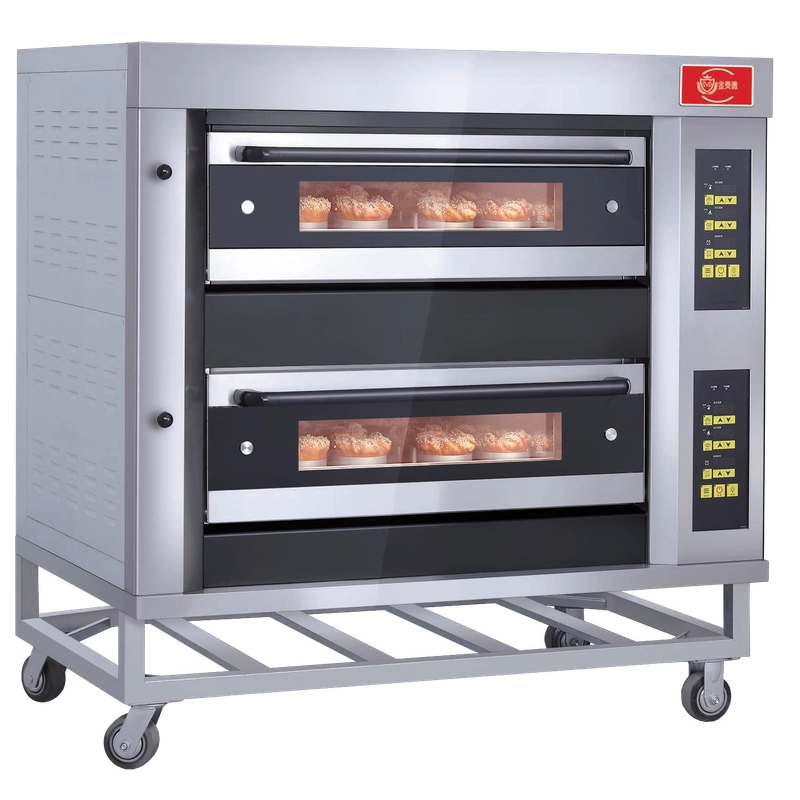
Consistent product quality is a major requirement for commercial bakeries. Customers expect bread, cakes, cookies and pastries to have a similar color, texture and level of doneness in every batch.
A hot air circulation oven, also known as a commercial convection oven, uses a fan-assisted heating system to circulate heated air throughout the baking chamber. Compared with an oven that mainly relies on static heat, circulating hot air can improve temperature distribution and reduce uneven baking.
How Does a Hot Air Circulation Oven Work?
The oven contains a heating system and one or more circulation fans. During operation, the fan moves heated air around the trays and products inside the chamber.
The basic process includes:
- Heating elements raise the chamber temperature.
- A fan distributes the heated air.
- Hot air passes around the trays and products.
- Air returns through the circulation path.
- The process continues throughout the baking cycle.
The design of the fan, air duct, tray spacing and chamber structure all influence baking performance.
Why Is Air Circulation Important?
Without effective air circulation, some areas of the oven may be hotter than others. This may cause products on one tray to bake faster while products on another tray remain lighter or less cooked.
A properly designed commercial hot air circulation oven can help provide:
- More even heat distribution
- Consistent surface color
- Reduced variation between trays
- More stable product texture
- Better batch repeatability
- Improved production planning
This is especially valuable when multiple trays are baked at the same time.
Suitable Products for a Convection Oven
Hot air circulation ovens are commonly used for products that benefit from even surface heating.
Typical applications include:
- Cookies
- Biscuits
- Cakes
- Cupcakes
- Pastries
- Bread rolls
- Toast products
- Drying foods
- Roasting ingredients
- Reheating prepared food
The exact baking results depend on temperature, fan speed, tray position, recipe and product moisture.
Four-Tray, Five-Tray, Six-Tray and Larger Models
Commercial convection ovens are available in different capacities. Small models may contain four or five trays, while larger models may use six, eight or ten trays.
When selecting tray capacity, bakery owners should consider more than the number of trays.
Important factors include:
- Tray size
- Space between trays
- Product height
- Baking time
- Number of batches per day
- Required hourly output
- Available floor space
- Electrical supply
A six-tray oven is not automatically more productive than a five-tray oven if the trays are smaller or if the recipe requires longer baking times.
Importance of Tray Spacing
Tray spacing affects airflow. When products are placed too close together, hot air may not circulate efficiently.
For better results:
- Avoid overloading trays
- Maintain suitable spacing between products
- Use compatible baking trays
- Keep airflow openings unobstructed
- Follow the recommended loading quantity
Tall products may require fewer trays to ensure sufficient vertical clearance.
Computer-Controlled Convection Ovens
A computer-controlled hot air circulation oven can help bakery operators save and repeat recipes.
Depending on the model, the controller may manage:
- Baking temperature
- Baking time
- Steam or humidity functions
- Fan operation
- Multi-stage baking programs
- Product recipe memory
- Alarm notifications
Digital control is particularly useful for chain bakeries, central kitchens and factories that need standardized production.
Instrument-Controlled Convection Ovens
Instrument-controlled models use conventional temperature controllers, timers and switches. They may be preferred by customers who want simpler operation and straightforward maintenance.
These models can still provide effective baking performance when the heating and airflow systems are properly designed.
How to Improve Baking Uniformity
Even with a high-quality oven, correct operation is important.
Preheat the Oven
Allow the oven to reach the required temperature before loading products. Loading too early may lead to inconsistent results.
Use Similar Product Sizes
Products with different weights or thicknesses may bake at different speeds.
Avoid Excessive Loading
Overloading can block air movement and reduce baking uniformity.
Clean the Fan and Air Ducts
Flour, grease and food particles may affect airflow. Regular cleaning helps maintain circulation efficiency.
Check Door Seals
Damaged seals may allow heat to escape and reduce temperature stability.
Choosing a Hot Air Circulation Oven Supplier
When comparing suppliers, request information about:
- Tray dimensions
- Heating power
- Temperature range
- Controller type
- Internal chamber material
- Fan configuration
- Door insulation
- Machine dimensions
- Production capacity
- Replacement parts
A suitable commercial convection oven should match both the bakery’s current output and its expected future growth.