BLOG
Gas Deck Oven vs Electric Deck Oven: Which Is Better for Your Bakery?
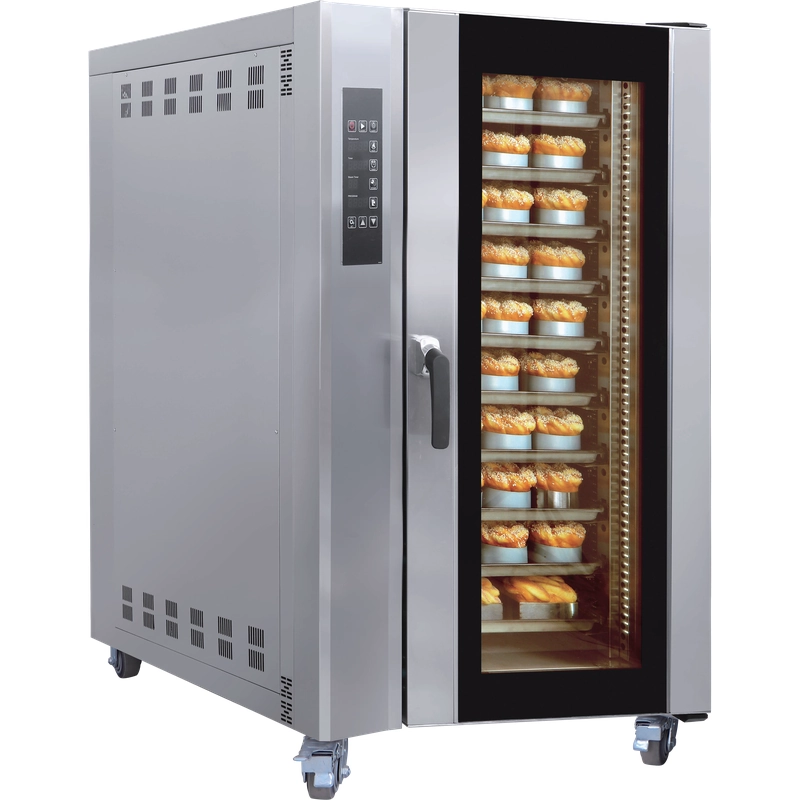
Selecting the right commercial oven is one of the most important decisions for a bakery, restaurant, hotel kitchen or food production facility. Among the most common options, gas deck ovens and electric deck ovens are widely used for baking bread, cakes, pastries, cookies, pizza and other bakery products.
Although both types of ovens can provide stable baking performance, they differ in energy source, temperature control, installation requirements and operating cost. Understanding these differences can help bakery owners choose equipment that matches their production capacity and local operating conditions.
What Is a Commercial Deck Oven?
A commercial deck oven is a baking machine designed with one or more independent baking chambers. Each chamber can normally accommodate one or several baking trays.
Common configurations include:
- One layer with one or two trays
- Two layers with two or four trays
- Three layers with three, six or nine trays
- Computer-controlled models
- Instrument-controlled models
- Gas-heated models
- Electric-heated models
Because each baking chamber can be operated separately, a multi-layer deck oven allows bakery operators to bake different products or adjust production according to daily demand.
Main Advantages of Gas Deck Ovens
A gas deck oven uses LPG or another compatible gas source as the primary heating energy. Electricity is generally used for the control system, ignition system and other auxiliary components.
Lower Operating Cost in Some Markets
In regions where gas prices are lower than electricity prices, a commercial gas deck oven may help reduce long-term energy costs.
This is especially important for:
- Medium-sized bakeries
- High-volume bread shops
- Commercial kitchens operating for many hours
- Food factories with stable daily production
However, energy cost should always be calculated according to local gas and electricity prices.
Suitable for Continuous Baking
Gas ovens are often selected for continuous commercial production. Their heating systems can provide strong heat output for repeated baking cycles.
A gas deck oven may be suitable for:
- Bread
- Buns
- Cookies
- Pastries
- Pizza
- Flatbread
- Bakery snacks
Reduced Dependence on High Electrical Capacity
Some production sites may not have sufficient electrical capacity for a high-power electric oven. In these cases, a gas oven can reduce the electrical load required by the bakery.
Main Advantages of Electric Deck Ovens
An electric deck oven uses electric heating elements to generate heat. It is widely used in bakeries, cafés, hotels, restaurants and food production workshops.
Accurate Temperature Adjustment
Electric heating systems are generally suitable for applications requiring controlled and repeatable temperatures. Depending on the controller, operators may adjust baking time, chamber temperature and other settings.
This makes electric deck ovens suitable for products that require consistent baking conditions.
Easier Installation in Many Locations
An electric oven does not require an LPG pipeline or gas cylinder connection. Where sufficient electrical supply is available, installation may be more straightforward.
Electric deck ovens are often used in:
- Shopping mall bakeries
- Hotel kitchens
- Café bakeries
- Supermarket bakery sections
- Central kitchens
- Small and medium-sized food factories
Cleaner Working Environment
Electric heating does not require direct gas combustion inside the heating system. This may simplify kitchen planning and reduce some gas-related installation requirements.
Local ventilation and electrical safety regulations must still be followed.
Computer-Controlled or Instrument-Controlled?
Both gas and electric deck ovens may be available with computer-controlled or instrument-controlled systems.
A computer-controlled deck oven usually provides a digital interface and convenient program settings. It is suitable for bakeries that want standardized recipes and easier operation.
An instrument-controlled oven typically uses traditional switches, knobs or individual temperature controllers. It may be easier for some operators to maintain and understand.
The most suitable option depends on:
- Operator experience
- Recipe standardization requirements
- Budget
- Maintenance capability
- Production management system
Which Oven Is Better?
There is no single answer for every bakery.
Choose a gas deck oven when:
- Local gas cost is competitive
- Production runs for long periods
- Electrical capacity is limited
- Gas installation conditions are available
Choose an electric deck oven when:
- Accurate temperature control is important
- Gas installation is inconvenient
- The bakery is located in a commercial building
- Production needs are small or medium
- Clean and simple operation is preferred
Final Purchasing Advice
Before ordering a commercial deck oven, confirm the following information with the manufacturer:
- Required number of trays
- Tray dimensions
- Daily output target
- Local voltage and frequency
- Gas type and gas pressure
- Maximum operating temperature
- Computer-controlled or instrument-controlled system
- Installation space
- Required certification
- Spare parts and after-sales support
A professional deck oven supplier should recommend the correct model according to your bakery layout, product type and production capacity.